Category Archives: Father

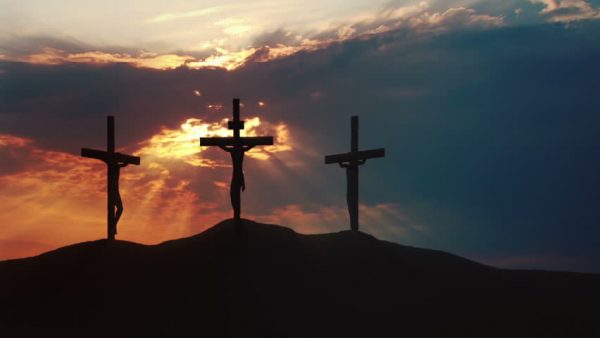
The Cross Is God’s Victory Over Violence

Since Vatican II the Catholic Church has been hesitating to speak clearly of the insight at its core: that the refusal of God the Father to overpower the enemies of Christ was an emphatic rejection of the use of force to build the Kingdom announced by Jesus – the Kingdom of God.

It is time to end that hesitation. The Youth Catechism published by the Church in 2011 proves that no other explanation of the Crucifixion makes sense.

YouCat’s Confusing Question and Answer

The following question and answer occur on page 65 of YouCat, The Youth Catechism of the Catholic Church.

Q 98. Did God will the death of his only Son?”

A. The violent death of Jesus did not come about through tragic external circumstances. Jesus was “delivered up according to the definite plan and foreknowledge of God” (Acts 2:23). So that we children of sin and death might have life, the Father in heaven “made him to be sin who knew no sin” (2 Cor 5:21). The magnitude of the sacrifice that God the Father asked of his Son, corresponded to the magnitude of Christ’s obedience: “And what shall I say? ‘Father, save me from this hour’? No, for this purpose I have come to this hour” (Jn 12:27). On both sides, God’s love for men proved itself to the very end on the Cross.

Is it truly obvious to anyone that God’s love for men (and, presumably, women) is proven by the statement that Jesus’s death on the cross resulted solely from God’s will.

That this inference does not come naturally – that it is counter-intuitive – is strongly suggested by all available research on Irish young people and their generally poor understanding of what happens at Easter, the church’s central sacramental event. Even so YouCat  is in use in some Irish dioceses as a reference source for faith formation – including the faith formation of adults. Question 98 (above) is not the only issue.

The Problem of Atonement.  If it was solely the will of God the Father – and not any  ‘tragic external circumstances’ – that caused the death of Jesus, then God the Father must also have predetermined the opposition to Jesus and the violence of the crucifixion. Why is it supposed that this theological perspective can close the distance between ourselves and God, when it is both scandalous and rendered obsolete by the most persuasive orthodox Catholic theology of the Cross? As Catholic teaching insists that God cannot will anyone to sin it can only be a mistake to allow any room for the inference that God the Father arranged or even condoned the violence of the persecution and crucifixion of Jesus.

The Kingdom of God is marginalized in YouCat, even though it was central to Jesus’ teaching. In Raymund Schwager’s dramatic theology of the Cross it was – and always is – the Father’s will – first of all – to build this Kingdom. Only peace reigns there – because all freely obey the two Great Commandments.  The crucifixion followed from the rejection of that kingdom by Jesus’ enemies – so this sinful rejection was a necessary cause of the predicament that obliged Jesus to choose between overpowering his enemies and death on the cross. His choice to undergo crucifixion rather than use force was not the repayment of a debt called in by God the Father for our sins but proof that the Kingdom of God cannot emerge out of violence. In Dignitatis Humanae (1965) the church rejected the use of force to spread the faith – and this was also the belief of the early church – so why is this not a sufficient explanation for Jesus’ own refusal to use force to build his Kingdom?

The Sins of Covetousness, Envy and Pride are not identified in YouCat as the sins of Jesus’s enemies that led to his arrest, false accusation and unjust execution. Nothing could be clearer than that these sins prevented them from following Jesus themselves. Yet Neither covetousness nor pride are indexed or defined or instanced in YouCat.  Envy is indexed but the explanation on page 254 confuses envy – which is directed toward a person or persons – and covetousness – a yearning for whatever the envied person possesses that the yearner cannot have without violence.

The Problem of Violence is not given central importance in YouCat even though it is central to scripture and to the dangers facing young people today. In revealing the role of covetousness, envy and pride in the opposition to Jesus the Gospel is also clearly pointing to the crucial role of those motives in all aggression.  That this revelation was intended by God is indicated by the warning to Mary given by the prophet Simeon in St Luke’s Gospel: “…and a sword will pierce your soul too — so that the secret thoughts of many may be laid bare” (Luke 2:34-35). This is not seen in YouCat.  It does see Jesus’ opposition to violence but does not link that opposition – or the will of God the Father – to Jesus’ choice of crucifixion before violence.

The name ‘Satan’ is completely missing from YouCat. In Schwager’s theology, as well as in scripture and in the Easter liturgy, Satan is identified as the generator of all aggression, via temptation, deceit and hatred.  Young people need to know the meaning of this name – ‘the Accuser’ – the dark spirit behind all breaches of the 8th commandment against ‘bearing false witness’.  They also need to know what it means to renounce Satan in the Easter liturgy – to reject all blaming of others for our own mistakes, and all unjust violence to save ourselves.

An imbalance in moral theology is inevitable if there is a dominant focus on the rules relating to sexual behaviour but no identification of the role played by covetousness, envy and pride in the genesis of injustice, crime, civil violence and war.  How can e.g. the so-called manosphere and the new Christian imperialism be countered if this is not corrected? Many young People will sense this imbalance in YouCat and tune out.

The Resurrection is not seen by YouCat as God the Father’s peaceful response to the killing of his Son – another exercise of non-violence to overpower those who use violence against the truth, through the courageous witness of believers.  That too is part of the gift of the Gospel to all faced with speaking the truth on behalf of justice. The Christian Creed is a sure passport through all hostility to the faith, all false accusation and all injustice. Believers in Jesus’ Resurrection cannot be defeated by force or the threat of death. Might, for us, will never also be Right.

Conclusion

YouCat is useful as an explainer of the church’s past mistakes – but not the answer to major questions that many young people will raise today – especially about violence and the cross and God’s part in the crucifixion of Jesus.

Dignitatis Humanae (1965) – the church’s own teaching on the principle of religious freedom – allows for an entirely different perspective – that God the Father does not and never could condone any use of violence to advance or secure the Christian truth and the Kingdom of God.

That all-important event of the death of Jesus had obviously two essential causes – the conspiracy against Jesus on the one hand, and Jesus’ obedience to God’s non-violent will on the other. God the Father did not, and could not, have willfully predetermined the first of those causes – and Christian teachers (especially) need to feel free to say that. To say that God permitted the abuse of their own freedom by Jesus’ enemies is to say something entirely different – that Christian faith can never by conveyed to anyone by the use of force.

To engage the interest of young people in the Easter story Catechists will need to see that story – and the many others in scripture on the same theme of victimisation –  as a revelation of the roots of all violence in human concern for social status. Time and again, those who choose violence in scripture do so to ‘save their faces’ – i.e. to avoid losing status. That God willed Jesus to surrender to crucifixion to reveal this connection is missing from YouCat. This textbook does not even index the greatest of all sins – pride – or name the one who personifies that sin – Satan, the Accuser.

It is time to say clearly why Jesus accepted death on the Cross: to prove by his Resurrection that violence has no future – and that God’s peaceful Kingdom will come, despite all of its enemies.

(The final two paragraphs of this article were edited for clarity on Thursday 19th February 2026.)

[To read a summary of the dramatic theology of Raymund Schwager SJ, click here.]

Views: 53

Of Good and Evil: V – Abba

Sean O’Conaill  © Reality  Jul/Aug 2010

We are chronically unsure of our own value!

We may be so unsure of it that we may waste years in search of the admiration of others.

Until one day we realise that we have wasted our time.

Only then are we ready to live.

Never in human history have we humans had access to so much knowledge. Never has the possession of knowledge had such prestige. Especially the kind of knowledge that allows financial information to be controlled and communicated through the world’s computer systems.

And never has there been less interest in making some kind of meaningful pattern of the knowledge at our disposal. What people call western civilisation was founded on a passionate search for an overarching truth that would make sense of everything. Today you are likely to get the blankest of looks if you ask one of today’s university graduates any truly important question.

Such as: “Why have reason and science alone been unable to build a perfect world?”

Or: “What important conclusions are you able to draw from everything you know?”

Or: “Why do you think the world is in crisis?”

Or: “What is the difference between knowledge and wisdom?”

Focused on increasingly narrow areas of expertise, aimed usually at making a living, our educated people have mostly lost confidence in their own ability to discern a deeper truth. They may even have bought into an arrogant “we know it all” attitude that disparages all the wisdom of the past.

Wisdom such as is compressed in the following story.

“There was a man who had two sons. The younger one said to his father, ‘Father, give me my share of the estate.’ So he divided his property between them.

“Not long after that, the younger son got together all he had, set off for a distant country and there squandered his wealth in wild living. After he had spent everything, there was a severe famine in that whole country, and he began to be in need. So he went and hired himself out to a citizen of that country, who sent him to his fields to feed pigs. He longed to fill his stomach with the pods that the pigs were eating, but no-one gave him anything.

“When he came to his senses, he said, ‘How many of my father’s hired men have food to spare, and here I am starving to death! I will set out and go back to my father and say to him: Father, I have sinned against heaven and against you. I am no longer worthy to be called your son; make me like one of your hired men.’ So he got up and went to his father.

“But while he was still a long way off, his father saw him and was filled with compassion for him; he ran to his son, threw his arms around him and kissed him. The son said to him, ‘Father, I have sinned against heaven and against you. I am no longer worthy to be called your son.’

“But the father said to his servants, ‘Quick! Bring the best robe and put it on him. Put a ring on his finger and sandals on his feet. Bring the fattened calf and kill it. Let’s have a feast and celebrate. For this son of mine was dead and is alive again; he was lost and is found.'”
(Gospel of Luke Ch 15:11-32)

All Christians will be familiar with this story, but we have still to exhaust the wisdom it contains, or to apply it properly to our own time. No one may ever have pointed to a key element of the story, the key that unlocks a meaning that would have been plain to every Jewish listener in Jesus’ time.

The fact that the son who left home and ‘squandered his wealth’ was the younger son.

Younger sons were especially doubtful of their own value in ancient times. Noticing and envying the dominant role of their fathers, they also noticed that their fathers tended to favour their eldest sons. And those eldest sons would inherit all of the prestige of their fathers some day. Younger sons could all too easily conclude: “Here I will always be second to someone – never first. I must go elsewhere to make a name for myself!”

Story after story in the Bible tells us of the rivalry that develops between brothers – and usually the rivalry has to do with the very same problem that we all have today:

We are chronically unsure of our own value, and have an extraordinary need for the reassurance of others.

And, repeating in our own lives the story of the ‘Prodigal Son’, we can cause ourselves extreme suffering in the years we spend looking for that reassurance. It is always a vain search, because most of those we look to for reassurance are looking for exactly the same thing themselves.

Does God punish us?

But this short story had an even greater meaning for Jesus’ Jewish listeners. To summarise their history, they were a people who went wandering in search of glory, who lost faith in the God who had delivered them from slavery, who suffered a second exile in Babylon, and who then found themselves in Jesus’ time under the captivity of Rome. For some of the Jews these humiliations were God’s punishment for their own waywardness.

But Jesus had an entirely different ‘take’ on these events. The parable just related explains it fully. Our worst humiliations are a self-punishment. They follow naturally from our vanity. But the God of Israel, and of all of us, is ‘Abba‘ – the father who never forgets his wayward sons. He sees us while we are ‘still a long way off’ and runs to us as we approach.

And today in Ireland?

We in Ireland desperately need to apply the parable to our own recent history. In times of despair in the past we sought meaning and solace in such stories – in the reassurance they bring that we are never forgotten, never ‘out of sight’, and always of value.

There were never more prodigal sons, and daughters, in need of such reassurance, than there are in Ireland today.

One of the main obstacles in the way of us seeking that reassurance is the fact that so many today are stuck fast in the Sargasso Sea of post-modern doubt. This is the intellectual outlook that pours scorn on any possibility that the Christian story told in the Creeds could be true after all. This outlook has been greatly strengthened by the revelations of ‘scandals in high places’ that Catholicism is still suffering.

Nevertheless, some of us still go to Mass today – because we have found ‘Abba’ in our own crises – and are confident that He sees everyone ‘far off’ . We need to equip ourselves to show the same compassion for those who will come seeking encouragement in the same story.

We need above all to have the confidence to ask: “What meaning can we derive from the facts of our own history?” and the confidence to pray for an answer.

It was in prayer that Jesus communed with ‘Abba’ – and found the strength to proclaim his truth until his last breath. It will be in prayer, and in reflection on the Gospels, that we will find a way of speaking the same truth to all those who are currently lost.

The worse things get, the closer everyone will be to understanding that mere facts are not enough, and that we must look for the meaning behind the facts to be truly knowledgeable.

It will always be through Jesus’ love of Abba that we human prodigals will most readily rediscover the kingdom of God – the realisation that Abba has always known us, and understands better than we do why we harm ourselves.

Views: 12

Towards a New Evangelism II: The Cursillo in Derry

Sean O’Conaill © Doctrine & Life 2001

In March 1997 I made my way for the first time to Termonbacca Monastery in Derry. In the process of retirement due to ill health from the teaching career that had dominated my life for thirty years, I was in shock over the loss of the school and career that had grounded me. Although also now a committed Catholic, I was also seriously concerned, as parent and teacher, with the failure of my church to address the exodus of its teenagers from faith, as well as home and school, at eighteen.

That failure was due, I was convinced, to an ill-conceived and desperate clinging to a patriarchal and clerical ‘Christendom’ model of leadership, when Christendom itself was patently dead, and deservedly so – the root source of the secularism that now dominated the west. Misled by centuries of inherited power, that leadership had become essentially verbal rather than exemplary, a matter of preaching a gospel narrowed to little more than sexual prudishness and perpetuation of the clerical system. Not even the shock of the sexual scandals that had begun with the Casey affair in 1992 had awoken the Irish episcopate to a realisation of the fact that Ireland was now part of the western mainstream, in which autonomous individualism had replaced deferential acceptance of inherited clerical authority.

Which meant in turn that the church was unable to critique the emerging crisis of individualism as a race for ‘success’ which most must lose in the long run, bereft of a community which will love them anyway. An Ireland in which Sunday Massgoing was the natural communal gathering of small local communities had been replaced since the sixties by a media-dominated and urbanised rootlessness that found the Mass incomprehensible and boring – but leadership had failed to react adequately. As a result most of the children I taught – including my own – now found patriarchal Catholicism a self-regarding straitjacket they were obliged to respect for the moment, but were instantly throwing off as soon as they became independent adults. What kind of church would still be around when they needed it, I wondered?

Termonbacca

I didn’t expect to find any part of the answer in Termonbacca in March 1997. All I knew was that I was in for a three-day experience of Catholicism to be conducted by a team of laymen. Would they be up-to-speed with a Vatican II model of church? It seemed unlikely.

I was, and I remain, astonished by what I found.

The culture shock began about nine o’clock on Thursday when about seventy laymen were gathered in the coffee bar. Most wore casual clothes and small pewter pectoral crosses – these were the team. The rest of us were the ‘candidates’ – the course members. An atmosphere thickly laden with cigarette smoke and Derry banter was eventually pierced by a call to order from the team leader, or ‘Rector’. The ‘Cursillo’, he explained, was a three-day course in Catholicism, originating in Majorca. He then called the team members to introduce themselves. Most did so nervously and quickly, saying when they had done their first weekend, and how much they had enjoyed it – but finishing with ‘I’m here to serve’. Others launched into a more extended appeal to us to stick it out for the three days – and these were heckled good humouredly by the rest. Three things struck me straight away. These men were mostly unsophisticated, but happy in one another’s company – and totally unembarrassed about their faith. I was having difficulty coping with the noise, the heavy Derry accents and the smoke – but I was also touched and moved in a way I hadn’t expected. I started paying attention, wondering who was orchestrating this bonhomie.

That evening finished with a talk on the Prodigal Son by the first priest to appear. It had an unusually frank and personal character – and this prepared us for what was to follow the next morning. We also had our first experience of Cursillo music – it was in the folk idiom with expert guitar accompaniment, but the singing had a fervour I was quite unaccustomed to – especially from men.

Critical?

We found ourselves on Friday seated at tables in a conference room overlooking the Foyle, listening to jokes told by team members who were clearly expert and intent on having a good time. This set the pattern for the three days. Life is often critical, but seldom serious, in Derry.

Then the talks began – half given by religious – but it was those given by the laymen that riveted me. These began with a sincere exposition of some aspect of the Cursillo ‘method’ (based upon piety, study and action) but then became an account of those experiences that had led the speaker to faith. Confidentiality prevents me recounting any one in particular – but all remain extraordinarily vivid.

Imagine the worst things that might have happened to any individual in Derry these past three decades – Bloody Sunday, or the aftermath of explosions; attempted sectarian assassination, or the blanket protest in the Maze, or the suicide of a family member, or an experience of child abuse: all against a background often darkened by unemployment, addiction, family violence and the breakdown of relationships. A multitude of the darkest valleys the human soul can experience. Into some of these we were given eloquent insight over three days, and into others I have been led on subsequent weekends on team. They were all very different from the valley through which I was then passing – but were all recognisable nevertheless as ultimate trials of the human spirit. And in all of them there had been a bonding with the Jesus of Gethsemane and Golgotha, an experience of the Church as sacrament of reconciliation, healing and ongoing community through what they call the Cursillo family – and now a joyful pursuit of others undergoing the same trials. The Cursillo framework is the means by which this is accomplished – and this explains why it is still thriving after twenty-two years.

‘Traditional’?

The traditional devotionalist Catholicism that goes along with this has misled some of the more theologically ‘with it’ local clergy to dismiss Cursillo as a remnant of a dying Church. As conducted in Derry it is in fact for me the most astonishing vindication of key elements of Vatican II theology, and a promise of a vibrant church of the future – one fully capable of meeting the challenges we now face.

In particular, although there is a strong Marian element, the practical theology of the Derry Cursillistas is fundamentally Trinitarian. Their overwhelming conviction is the unconditional love of Jesus for all, especially those hurt by life. He is a God who allowed himself to be broken in order to find the broken. The Father is perceived not as inexplicable demander of due punishment for all, but as generous giver of the Son, and celebrator of our return to his house. The Spirit is invoked as the one who enables the speakers to tell their stories, who allows us to be honest and loving – and then joyful in our reunion. Salvation is therefore easily explained: it is the dawning of another life in communion with these Three, one that truly now has nothing worse to fear than the possibility of alienation from them.

How that joy is mediated on the Cursillo weekend I cannot precisely describe, as it could diminish the experience somewhat for those who take on the weekend.

Being Oneself

One experience I can recount however. Towards the end of the weekend all get the chance to sit together in a family-sized room, as a member of their table team, in the presence of the blessed sacrament, and to pray spontaneously to the really present Lord. The sincerity with which this opportunity is seized, with complete openness, faith and intimacy, is quite unique in my experience. There is a sense of something shared, of deep communion and warmth, that celebrates the sacrament far more powerfully than is ever possible in the parish church.

The spirit of generosity that grounds the weekend, and the humility with which these men speak of their own lives, has often an extraordinary effect upon the demeanour of the candidates. Often closed and suspicious to begin with, most find that at least one of the team has shared their darkest experiences, and come through with the support of God’s grace. This creates trust and openness, and a willingness to experience the sacraments in a context of welcome rather than criticism. The most sophisticated theologian could not convey more powerfully the love of God for the individuality of every person.

The result is described by a Cursillista friend as ‘the losing of the mask’ – the abandonment of pretence to a disdainful invulnerability and independence, of remaining unwounded by life and needless of community. Realising that their deepest wounds and insecurities are understood and accepted, candidates lose that fear of openness that prevents them from being truly themselves. I have never seen men more freely and joyously respond.

Uneducable?

One other experience I remember vividly, as it relates directly to my own professional arrogance. At the end of one weekend, at the feedback session, a young candidate of about twenty went freely to the microphone and explained that as a boy he had been dismissed as uneducable. This had profoundly depressed him, making him socially withdrawn and fearful, and unable to feel positively towards himself. On the weekend he had been accepted so fully for himself that he had lost this fear, and learned to respect himself. All of this he said with perfect lucidity, revealing again the power of Christian community to free the individual from self-dislike – and to unlock people from the prisons that supposedly intelligent people can put them in.

From this, and from many other similar experiences, I have learned that the secular pyramid of esteem, founded so rigidly nowadays on educational and career attainment, is spiritually fatuous and unjust – that when we relate to one another in a context where social status has no meaning we can be most truly ourselves, able to converse and relate as the equals we truly are, separated from secular pretensions. I serve on team knowing that I am valued simply for myself – not for the social accidents that have made me a teacher and writer. With many Derry Cursillistas I have formed enduring friendships which have given me too another life.

Which brings me to the conclusion that we intellectuals are often our own worst problem. Too often educational success has separated us from the experience of the darkest valley that the less educated have been through. We have also been taught the enlightenment’s fear of deep emotion, and its bias towards the mind as the sole repository of wisdom and happiness. So we may suppose that somewhere in our refinements and abstractions the ultimate truth resides, and that the unsophisticated faith of the less educated is somehow inferior and passé. We may also suppose that they should see us as their salvation – when in fact we may have far more to learn from them – especially the gifts of spontaneity and humility, laughter and tears.

Needless Complexity

Thoughtful Derry Cursillistas generally feel a tolerant sympathy for theologians, who in their view complexify what is really very simple – that Christ’s gift of himself renews simple words like love, peace and joy – cleansing them from the cloying sentimentality and cynicism that have made them almost meaningless. He does this by being, at Termonbacca, the presence that redeems the past, allowing people to share these words, in perfect sincerity, on the weekend, with those still in need of this experience. What they have to learn from an updated Church is therefore far, far less than they have to contribute to it – in wisdom as well as joy.

That the Cursillo framework elsewhere can also be a framework for a more chauvinist and fundamentalist form of Catholicism is clear from certain Internet sites. In Derry it is fiercely egalitarian, keeping structure to a minimum and determined to prove that personal freedom is entirely possible in the context of a genuine love of God and neighbour. Uniting evangelism with a deep sense of community, it has replaced for many the extended family that Ireland has only recently lost. It can also be a foundation for the recovery of a spirituality that truly expresses the Irish character. That Christian evangelism must be far more than a matter of mere words, that it must now be expressed in the rebuilding of community, is proven there conclusively.

Views: 9