It’s a mistake to think we can programme Christian conversion.
~
“We should, therefore, look to the Gospels to outline for us the journey of conversion we are required to undertake, learning little by little to make Jesus’ practices our own.”
This is just one of twenty-four references to ‘conversion’ in the Final Report of the 16th Synod on Synodality. Called to conversion by the Holy Spirit, we learn that the whole church is now to undertake a continuous conversion of relationships, of processes and of bonds.
But if ‘conversion’ is something that happens whenever we ‘undertake’ it, how come the bishops of the church were not converted to effective child protection in the church until – beginning about 1985 – victims of childhood clerical abuse – aided by secular police, lawyers, courts and media – showed us that instead bishops globally were endangering children by hiding the problem – and that this was standard procedure, mandated by the church at the highest level?
The fact that the magisterial church was converted to child protection – and then to synodality – only by this totally unexpected public relations disaster is nowhere acknowledged in this final report of the 16th Synod of 2024 – and this alone tells us that the magisterial church still has ‘ways to go’ on the conversion journey if it is to lead the rest of us convincingly.
Charged now with understanding ‘Mission’ and ‘Adult Faith Formation’, every diocese in Ireland would be wise to ask what exactly went wrong with the faith formation model we inherited.
The Great Mistake
Would we not be wise to consider the possibility that the root of the problem was a tendency to think of adult Christian faith as programmable to begin with – never questioning that schooling and seminary training, topped by the sacrament of ordination, would signify complete Christian conversion?
That these might well signify merely conversion to Catholic institutional careerism and conformity – as revealed by the disasters still ongoing – has still not been acknowledged by that same institution.
Was any great saint of the church ever converted to their mature adult faith by any formal faith formation programme, beginning in childhood? Peter, to begin with, spent three whole years with the greatest teacher ever – and was then fully converted only by the humiliating experience of his own tragic weakness when faced with the hostile crowd, and then Jesus’ forgiveness. Paul was converted – we are told – by the shocking intervention of the Lord himself, from Heaven, on the road to Damascus to root out the Christians there.
Augustine of Hippo in the late 4th century had to confront the reality of his own adult dissolution and confusion before faith could truly set in. Patrick of Ireland was converted by an entirely unplanned experience of kidnapping and slavery, while Columba of Ulster had to experience the violence caused by his own ecclesiastical ambition and rivalry with St Finnian.
Pope Francis – famously changed by adult reverses
Isn’t there a discernible pattern in all of these stories – of mature adult Christian faith arising out of unexpected humiliation rather than any early deliberate early life formation programme? Didn’t that pattern hold true for Francis of Assisi, Ignatius of Loyola, Alphonsus Liguori, Therese of Lisieux, Maximilian Kolbe, Franz Jagerstatter – and Pope Francis?
Doesn’t the entire history of the church – underlined now especially by the hierarchical disaster we are undergoing – tell us that the deepest Christian faith is arrived at only by the unplanned experience of personal life crisis and powerlessness – the necessary downfall of youthful egotism – not by any faith formation programme received in relative tranquillity?
If the church had always understood and taught this – that faith formation is always tested – and completed – ONLY by unwanted and unplannable adult setback – and that ordination and conversion are NOT the same thing – would there ever have been even a reason for secrecy over clerical child sexual abuse?
Was it not the vain belief that faith can be fully formed by school and seminary programmes that led to the mystique of clergy – the clericalism – that produced Crimen Sollicitationis in 1962 – the binding of all Catholic bishops to strict secrecy on clerical sexual abuse of minors?
This is not to argue that we do not need formation and early sacraments: both are essential if we are to interpret correctly the meaning of adult setback. The mistake is to believe that conversion is achieved if we simply ‘undertake’ it – and then complete the set course.
If there is indeed no humility without humiliation isn’t that also the explanation of the church catastrophe we are living through? Don’t we now need this insight – this warning – to be woven deeply into all of our formation programmes, to counteract the pride and naivety that can all too easily result from simply completing the programme?
Shouldn’t the church already be teaching us, explicitly, that formation and ordination are not conversion?
The Pattern of Spiritual Development
Richard Rohr OFM
For decades the contemplative Richard Rohr OFM has been teaching of the necessary experience of suffering to take us from the first half of life into the second. He defines suffering as a deep experience of complete powerlessness. Don’t we now need to understand this as humiliation, the necessary adult downfall of early egotism that cannot be programmed?
It isn’t only the church that is undergoing humiliation just now. So is the secularenlightenment, confronted by the environmental consequences of three centuries of exploitation of fossil fuel energy, as well as the real danger of nuclear self-annihilation. Hubris still counsels an onward march to ‘artificial intelligence’ but wisdom warns that pride always comes before a fall – and that the true future of humankind will be arrived at only by humiliation – and humility – first of all.
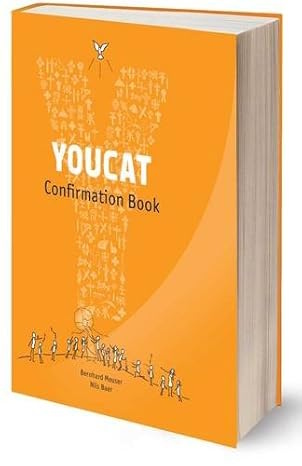
There is no escaping the disaster course that youthful pride and egotism always have in store for us humans, so how did the Catholic magisterium come to publish in 2011 a Youth Catechism – YouCat – which did not even index that word ‘pride’, giving copious examples? Will we ever hear this explained in homilies on Jesus’ question about the beam in one’s own eye that leads us to complain about the motes in the eyes of others?
Nothing could be clearer than the truth of Lord John Acton’s pithy sentence of 1887, in a letter insisting that even bishops and popes could be corrupted by power. “There is no worse heresy than that the office sanctifies the holder of it.“
We are surely being trained – by the humiliation of the church – to see humbled pride as the pattern of historical human development also. Ongoing ecclesiastical and secular failures are the indispensable God-given formation and conversion course that we could never ourselves have planned.
A. The violent death of Jesus did not come about through tragic external circumstances. Jesus was “delivered up according to the definite plan and foreknowledge of God” (Acts 2:23). So that we children of sin and death might have life, the Father in heaven “made him to be sin who knew no sin” (2 Cor 5:21). The magnitude of the sacrifice that God the Father asked of his Son, corresponded to the magnitude of Christ’s obedience: “And what shall I say? ‘Father, save me from this hour’? No, for this purpose I have come to this hour” (Jn 12:27). On both sides, God’s love for men proved itself to the very end on the Cross.
[YouCat – The Youth Catechism of the Catholic Church, 2011 – Article 98]
Why should anyone be asked to believe that if God did will the death of his son for the reasons given, this death was not caused first of all by ‘tragic external circumstances’ – the sinful designs of men – that were never willed by God?
Does it not matter that through an obvious logical non sequitur a standard Catholic catechetical source for young people could lead them to attribute the violence of the crucifixion to the will of God, rather than to human hatred?
Is it unimportant also that YouCat does not explain at this point that God’s primary project was, and still is, the utterly non-violent Kingdom of God?
As, according to the Gospel, it was the rejection of the Kingdom offered by Jesus that led to his crucifixion, why does YouCat background that rejection as a mere ‘tragic external circumstance’ and foreground the Father’s will that Jesus should die?
How can that decision help young people today to understand the prayer that Jesus gave us, for what the Father wills first of all – the coming of the Kingdom of God?
For me, in failing to insist that the killing of any person – Jesus included – is never desired, intended or arranged by God, this Catechetical approach goes to the heart of a problem well stated by Archbishop Eamon Martin in Kilkenny on October 18th, 2025. “People need the faith, they need the treasure that we have … but somehow we are finding it difficult to reach them!”1 Archbishop Eamon Martin speaking at the conclusion of the Pre-Synodal Assembly of the Irish Synodal Pathway in Kilkenny on 18 Oct 2025. https://synod.ie/video-presentations-from-kilkenny-assembly-available-now/
Simeon, The Cross and ‘Secret Thoughts’
Simeon’s Prophecy
To begin with, that non sequitur in YouCat 98 is itself invalidated by the Gospel, taken holistically. In Luke’s Gospel we are told that when the infant Jesus was presented in the Temple the prophet Simeon told his mother Mary that the crucifixion would happen “so that the secret thoughts of many may be laid bare” (Luke 2:34,35). Given that the ‘external circumstances’ of the crucifixion included all of those actors who sought or acquiesced in Jesus’ death – all vividly described in the Gospels – is it likely that God never intended us to learn anything from those accounts about the motivations of those same men?
Indeed, given the contemporary resonance of those accounts, why would it not be likely that God’s willing of the crucifixion was always intended to reveal not only the hidden thoughts of Caiaphas and Herod and Pilate, and even Judas and Peter – but whatever lies always behind aggression?
Here we encounter all of the difficulties caused by studying only the singularity of the story of Jesus as Son of God – and never the obvious fact that, read just as the story of an honest individual, it is just one of many thousands of such stories of victimisation and torture – in history and the daily news as well as scripture.
Adolescence and Violence
To take just one example, in March 2025 the UK parliament discussed a streaming TV drama called Adolescence – centred on the fictional story of a thirteen-year-old boy who, in a fit of rage, stabs to death a 14-year-old girl who has rejected and then cyber-bullied him. This plotline resonated for many as reflecting a western cultural phenomenon known as the manosphere, a widespread male rebellion against the alleged excesses of feminism. The term ‘incel’ has emerged, to describe males allegedly deprived of their ‘right’ to sexual intimacy by these alleged feminist excesses – making these put-upon males ‘involuntarily celibate’.
For UK lawmakers the context of Adolescence is not just this online phenomenon but a plague of teenage knife crime that makes the deaths of young people from uncontrolled adolescent rage a dismal staple of the daily news.
As online subcultures now have global scope, all of this is necessarily impacting on the climate in which Irish adolescents go to school – where, coincidentally, they will encounter other plotlines of sexual aggression and murder. In one of those an ancient King of Israel arranges the death in battle of the husband of a beautiful woman whom he has secretly seduced. In the very same source two elders in Babylon conspire to proposition a young wife, threatening her with an accusation that will ensure her death if she does not comply.
Is there not a pattern in these stories, very likely the same pattern as in some shocking episodes of teen-on-teen violence in Ireland? Have we humans – males especially – an often fatal difficulty in coping with any shameful disaster – as in recent killings of wives by suspicious husbands – and even sometimes of whole families by parents facing some kind of social catastrophe?
Wasn’t King David’s murder of Uriah an archetype that echoes down the ages – the celebrity king who cannot face the shame of exposure for selfishly seducing the wife of one of his own elite soldiers?
“All violence is an attempt to replace shame with self-esteem,” insists the US prison psychiatrist James Gilligan, summarising the argument of a 1996 book focused upon what he calls the ‘epidemic’ of violence in his own land2James Gilligan, Violence: Our Deadly Epidemic and Its Causes. Putnam Publishing Group 1996.
Naming the Pattern
If we focus just on the most obvious issue that arises out of all of these stories – the problem posed to King David, to that 13-year-old in Adolescence, and to anyone – by social shame we can see not only a vulnerability but an extreme danger. These ‘tragic circumstances’ all too often offer a stark choice between violence and humiliation. What name can we give to the force – or weakness – or sin – that impels so many to give tragic free rein to violence in those circumstances?
Why does scripture take us constantly to this place of violence – if not to call us to see – and name – the pattern of behaviour, and the specific human weakness, that we find there?
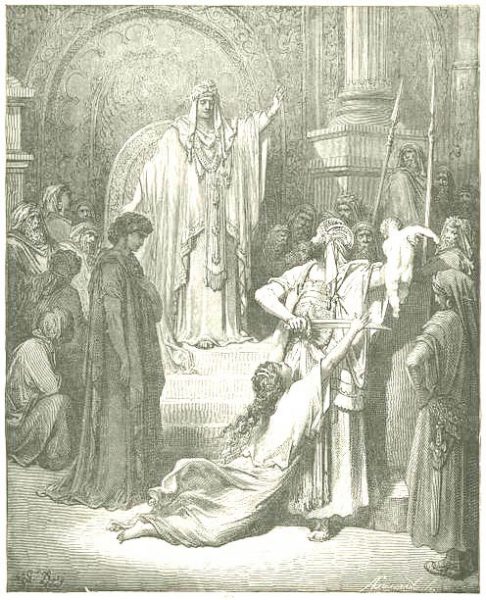
Solomon’s Judgement of two women who claim the same child – by Gustav Doré
Cain’s murder of his brother, Abel; the jealous brothers of Joseph who sell him into slavery and then deceive their father Jacob; King Saul in his bitter rivalry with the younger David; King David himself in his plotting against Uriah; Solomon’s problem of the two women who claim the same infant after one of them has overslept her own child; Jezebel the wife of King Ahab in her dispossession and murder of Naboth; those two Babylonian elders who plot against Susanna; Herod the Great’s storied resentment of the infant Jesus; the capitulation of Herod Antipas to the desire of his wife Herodias to see the head of John the Baptist on a platter; Caiaphas the High Priest who sees the elimination of Jesus as a means of avoiding a greater disorder and his own overthrow; Pilate in his sentencing of Jesus to death, despite his obvious misgivings.
Is there not an obvious pattern, a sameness, in these stories of moral failure, and then violence?
Is not the consistent root cause of that failure what is now called status anxiety – fear of loss of the respect of important others – fear of shame?3Alain de Botton, Status Anxiety, Penguin, 2004
If so, what do we call the sin that led them in the end to capitulate to that fear – and to violence?
Does not Jesus’ disregard for his status – his freedom in calling out religious hypocrisy but lack of vindictiveness in accepting ‘blowback’ – cast the problem of his accusers and judges in the sharpest relief? Where he could accept the greatest humiliation they could not even accept the verbal charge of hypocrisy.
If his most singular virtue was indeed his humility – his willingness to tolerate humiliation, what was obviously – by contrast – their vice?
Integrity and Holiness
Is it not obvious that in asking Jesus to endure the Crucifixion the will of the Father was for Jesus to witness to the Kingdom of God of which he had preached unarmed and selflessly – right to the bitter end – and that the rejection of that kingdom by his accusers was the immediate cause of his arrest and trial? Having preached mutual service rather than ambition, and the turning of the other cheek when insulted, how could it have been consistent for Jesus in the end to choose the only alternative to arrest and crucifixion – domination and war?
How could he have chosen that option without matching and mirroring the pride of his enemies?
Is not aggressive violence always a choosing of pride before the kingdom of God? Is that same kingdom not exemplified by all who bear with humiliation without violence? Are there not many such in Ireland today?
And was it not especially to take away all of these particular sins of pride – past, present and future – that Jesus died, in obedience to the Father?
Pride and Violence
Strikingly, although YouCat does list pride among the capital sins it nowhere defines or describes or instances this vice – especially as a danger to young people today. It does not even list pride in its index – while sexual behaviour and the church’s rules for that – including those for birth regulation – feature prominently.
And although YouCat does explore Jesus’s opposition to violence it does not link this to the explanation of the cross. Jesus is obedient to the Father but nowhere is it stated clearly that the Father’s willing of the Cross was a protest against prideful violence, and not a seeking of it.
And nowhere in YouCat is the psychology of violence explored – despite the fact that the Bible is probably the greatest of all literary sources on the subject.
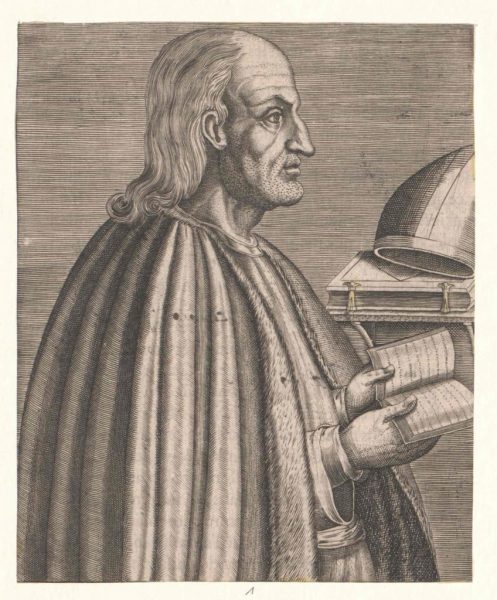
St Anselm of Canterbury
The most likely explanation for these failures is the Catholic theological inheritance of the Middle Ages. St Anselm of Canterbury could not ask himself in the 1090s if the Christian violence sanctioned first by Constantine in 312 – for example the violence of the first Crusade (1096-99) – might be tainted by pride, so instead he interpreted the Cross not as a protest against violence but primarily as the logical repayment of a debt owed to the Father by sinful humanity4St Anselm of Canterbury, Cur Deus Homo, c.1098. This unhelpful emphasis has trickled down the centuries – to the 1994 adult Catechism of the Catholic Church and to its 2011 offspring, YouCat.
The result is a resource that risks attributing the human weakness of status anxiety – and even the vice of pride – to God himself – when redemption obviously has to do with the opposite understanding – that God is, above all, both love and humility – and that he offers, through Jesus, freedom from all fear, including fear of shame.
The non-appearance of the name Satan in YouCat can possibly be explained by the need to emphasise the totality of the victory of the Cross, but given the certainty of questions about Satan from young people, this is a mistake. There is an often overlooked advantage in attributing all human fault in the beginning to some source other than ourselves, and a particular advantage in attributing our status anxiety – our chronic tendency to doubt our own value as we are – to an external source, as do Genesis and the Gospels. That value becomes clear if we ask ourselves how we might counsel a young person who has been overwhelmed by an impulse towards violence, as in that TV drama Adolescence.
Is not murderous pride indeed a deeply mysterious and dark entity, a ‘force’ that can ‘get into’ us – in the most ‘tragic circumstances’? Do we truly know what we are doing then? Do we not all need to realise that this too was the Evil that was overcome in Gethsemane and on the Cross, for the forgiveness of even the worst of sins?
That the word ‘Satan’ means ‘the accuser’ – thereby naming the historical pattern of false accusation that can lead to ostracisation and lynching – is surely important for young people to know also, in a pervasive climate of online aggression and the scapegoating of immigrants.
And do we not all need to be fully conscious of what we are doing at Easter, when we renounceSatan, the author of all sinful pride?
‘Do Not Covet’?
Not for nothing does Genesis point to the ‘serpent’ as the author of all human dissatisfaction. “You are not enough as you are!” – is not this the insistent message we all mysteriously hear, in every encounter with someone who seems to have more. This too is something that young people need to understand. Our tendency towards comparison, towards feeling ashamed of what we seem to lack, and towards envy of others – especially for whatever makes those others more popular – explains the power and prestige of the 21st century ‘influencer’ – and all world conflict as well.
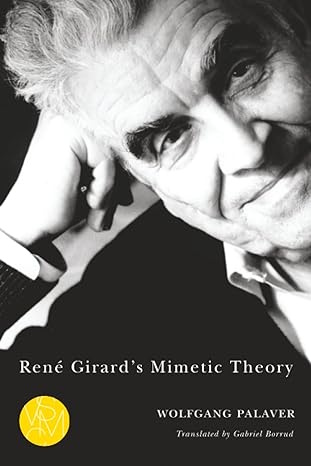
No one has explained the danger of this human frailty better than René Girard5Wolfgang Palaver, René Girard’s Mimetic Theory, Michigan State University Press 2013. If we must have whatever our envied neighbour has, what will we do if we cannot have that without violence?
To reflect on the danger of one’s own envy is to be ready to understand also why Jesus was envied by his enemies, and why he was accused. Themselves already socially eminent, those men felt keenly a lack of the supreme gifts of spiritual insight, leadership and healing they recognised in him. They felt most keenly of all his razor-sharp identification of their ‘mask-wearing’ – the pretences that too often go with mere religious performance. This was the birthplace of their conspiracy to kill him, rejecting the Kingdom they could otherwise have freely entered.
It is another peculiarity of YouCat that while it does list the warning against coveting among the ten commandments it nowhere explains the term. Don’t young people need to realise how this weakness, which we all share, is so helpful in explaining the chaos that surrounds us?
Covetousness, envy and pride – andnotthe will of God the Father – were together the wellspring of the violence of the Crucifixion, and lie at the root of all aggression today.
Revision
YouCat needs revision. In striving to emphasise Jesus’ obedient taking away of sin it backgrounds what led to his arrest, condemnation and execution – the rejection of the Kingdom of God by those in power. This is misguided, especially in a work intended for the young.
YouCat needs to name and highlight the particular sins that motivated the enemies of Jesus – the sins that above all need to be taken away.
In explaining the crucifixion it needs to summarise what is now well known, especially following the insights of scholars such as René Girard and James Gilligan, about the psychological and social origins of violence.
As it stands, YouCat’s multiple references to sin, without specificity, reinforce the perception that Catholicism is still fixated on ‘sins of the flesh’, and its index – given especially what isn’t anywhere there – reinforces that view.
When it comes to ‘God’s will’ YouCat needs to say more clearly that God willed the salvific outcome of the crucifixion – the gift of Jesus’ obedience – but not the sin, the violent motives, that led to the crucifixion. The Cross reveals the humancycle of: covetousness > envy > pride > violence – but not any will of God for violence.
The absence of any mention of ‘Satan’ needs to be reconsidered, to justify the liturgical Easter references, to emphasise the subtlety of temptation and to name the mystery of evil.
Especially regrettable therefore is the marginalisation of Jesus’s central teaching on the Kingdom of God – the peaceful kingdom that can never emerge out of violence. How else can ‘God’s will’ – and the Lord’s prayer – be properly explained?
Do not all young people these times need to know that when they ‘bite their tongues’ – instead of answering insult with insult, online or elsewhere – they too are building the kingdom of the Father – by taking up that cross?
Was it not to ensure the coming of that Kingdom that Jesus died, in obedience to the Father, to ensure that evil will not win – because covetousness, envy and pride – and violence and death and shame – now have no final dominion over anyone?
Since Vatican II the Catholic Church has been hesitating to speak clearly of the insight at its core: that the refusal of God the Father to overpower the enemies of Christ was an emphatic rejection of the use of force to build the Kingdom announced by Jesus – the Kingdom of God.
It is time to end that hesitation. The Youth Catechism published by the Church in 2011 proves that no other explanation of the Crucifixion makes sense.
YouCat’s Confusing Question and Answer
The following question and answer occur on page 65 of YouCat, The Youth Catechism of the Catholic Church.
Q 98. Did God will the death of his only Son?”
A. The violent death of Jesus did not come about through tragic external circumstances. Jesus was “delivered up according to the definite plan and foreknowledge of God” (Acts 2:23). So that we children of sin and death might have life, the Father in heaven “made him to be sin who knew no sin” (2 Cor 5:21). The magnitude of the sacrifice that God the Father asked of his Son, corresponded to the magnitude of Christ’s obedience: “And what shall I say? ‘Father, save me from this hour’? No, for this purpose I have come to this hour” (Jn 12:27). On both sides, God’s love for men proved itself to the very end on the Cross.
Is it truly obvious to anyone that God’s love for men (and, presumably, women) is proven by the statement that Jesus’s death on the cross resulted solely from God’s will.
That this inference does not come naturally – that it is counter-intuitive – is strongly suggested by all available research on Irish young people and their generally poor understanding of what happens at Easter, the church’s central sacramental event. Even so YouCat is in use in some Irish dioceses as a reference source for faith formation – including the faith formation of adults. Question 98 (above) is not the only issue.
The Problem of Atonement. If it was solely the will of God the Father – and not any ‘tragic external circumstances’ – that caused the death of Jesus, then God the Father must also have predetermined the opposition to Jesus and the violence of the crucifixion. Why is it supposed that this theological perspective can close the distance between ourselves and God, when it is both scandalous and rendered obsolete by the most persuasive orthodox Catholic theology of the Cross? As Catholic teaching insists that God cannot will anyone to sin it can only be a mistake to allow any room for the inference that God the Father arranged or even condoned the violence of the persecution and crucifixion of Jesus.
The Kingdom of God is marginalized in YouCat, even though it was central to Jesus’ teaching. In Raymund Schwager’s dramatic theology of the Cross it was – and always is – the Father’s will – first of all – to build this Kingdom. Only peace reigns there – because all freely obey the two Great Commandments. The crucifixion followed from the rejection of that kingdom by Jesus’ enemies – so this sinful rejection was a necessary cause of the predicament that obliged Jesus to choose between overpowering his enemies and death on the cross. His choice to undergo crucifixion rather than use force was not the repayment of a debt called in by God the Father for our sins but proof that the Kingdom of God cannot emerge out of violence. In Dignitatis Humanae (1965) the church rejected the use of force to spread the faith – and this was also the belief of the early church – so why is this not a sufficient explanation for Jesus’ own refusal to use force to build his Kingdom?
The Sins of Covetousness, Envy and Pride are not identified in YouCat as the sins of Jesus’s enemies that led to his arrest, false accusation and unjust execution. Nothing could be clearer than that these sins prevented them from following Jesus themselves. Yet Neither covetousness nor pride are indexed or defined or instanced in YouCat. Envy is indexed but the explanation on page 254 confuses envy – which is directed toward a person or persons – and covetousness – a yearning for whatever the envied personpossesses that the yearner cannot have without violence.
The Problem of Violence is not given central importance in YouCat even though it is central to scripture and to the dangers facing young people today. In revealing the role of covetousness, envy and pride in the opposition to Jesus the Gospel is also clearly pointing to the crucial role of those motives in all aggression. That this revelation was intended by God is indicated by the warning to Mary given by the prophet Simeon in St Luke’s Gospel: “…and a sword will pierce your soul too — so that the secret thoughts of many may be laid bare” (Luke 2:34-35). This is not seen in YouCat. It does see Jesus’ opposition to violence but does not link that opposition – or the will of God the Father – to Jesus’ choice of crucifixion before violence.
The name ‘Satan’ is completely missing from YouCat. In Schwager’s theology, as well as in scripture and in the Easter liturgy, Satan is identified as the generator of all aggression, via temptation, deceit and hatred. Young people need to know the meaning of this name – ‘the Accuser’ – the dark spirit behind all breaches of the 8th commandment against ‘bearing false witness’. They also need to know what it means to renounce Satan in the Easter liturgy – to reject all blaming of others for our own mistakes, and all unjust violence to save ourselves.
An imbalance in moral theology is inevitable if there is a dominant focus on the rules relating to sexual behaviour but no identification of the role played by covetousness, envy and pride in the genesis of injustice, crime, civil violence and war. How can e.g. the so-called manosphere and the new Christian imperialism be countered if this is not corrected? Many young People will sense this imbalance in YouCat and tune out.
The Resurrection is not seen by YouCat as God the Father’s peaceful response to the killing of his Son – another exercise of non-violence to overpower those who use violence against the truth, through the courageous witness of believers. That too is part of the gift of the Gospel to all faced with speaking the truth on behalf of justice. The Christian Creed is a sure passport through all hostility to the faith, all false accusation and all injustice. Believers in Jesus’ Resurrectioncannot be defeated by force or the threat of death. Might, for us, will never also be Right.
Conclusion
YouCat is useful as an explainer of the church’s past mistakes – but not the answer to major questions that many young people will raise today – especially about violence and the cross and God’s part in the crucifixion of Jesus.
That all-important event of the death of Jesus had obviously two essential causes – the conspiracy against Jesus on the one hand, and Jesus’ obedience to God’s non-violent will on the other. God the Father did not, and could not, have willfully predetermined the first of those causes – and Christian teachers (especially) need to feel free to say that. To say that God permitted the abuse of their own freedom by Jesus’ enemies is to say something entirely different – that Christian faith can never by conveyed to anyone by the use of force.
To engage the interest of young people in the Easter story Catechists will need to see that story – and the many others in scripture on the same theme of victimisation – as a revelation of the roots of all violence in human concern for social status. Time and again, those who choose violence in scripture do so to ‘save their faces’ – i.e. to avoid losing status. That God willed Jesus to surrender to crucifixion to reveal this connection is missing from YouCat. This textbook does not even index the greatest of all sins – pride – or name the one who personifies that sin – Satan, the Accuser.
It is time to say clearly why Jesus accepted death on the Cross: to prove by his Resurrection that violence has no future – and that God’s peaceful Kingdom will come, despite all of its enemies.
(The final two paragraphs of this article were edited for clarity on Thursday 19th February 2026.)
[To read a summary of the dramatic theology of Raymund Schwager SJ, click here.]
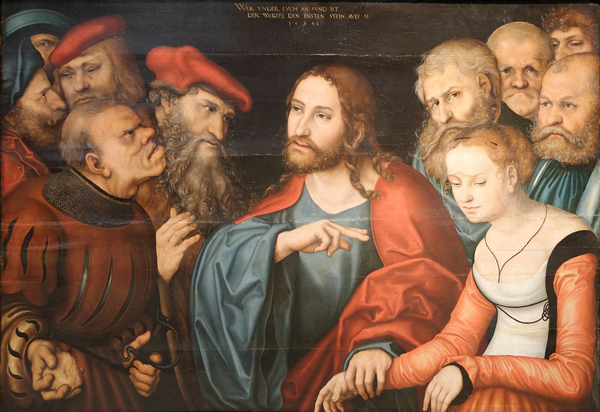
Jesus Rescues the Accused Woman [John 8:1-11] by Lucas Cranach – (Courtesy of Wikimedia Commons)
Telepathy (from Ancient Greek τῆλε (têle) ‘distant’ and πάθος/-πάθεια (páthos/-pátheia) ‘feeling’).
No man-made machine will ever match the greatest human gift. Given true humility – the under-appreciated reward of all suffering – we humans can and docommunicate (spiritually, emotionally and intellectually) – with the mysterious source of all that exists – and all that has still to happen.
This is the evolutionary destiny of humankind – communion with our Source, and then – lovingly – with one another. It is a gift that comes with humility – which comes, in turn, from disaster – often the inevitable consequence of what we tend to call ‘success’.
The current triumphalist hype over computerised artificial intelligence – ‘AI’ – is certain to prove hollow. While often helpful, AI will also mislead and deceive, especially by flattery – and far too much is expected of it (especially in the role of ‘friend’). How could any mere human artifact be the end of human history? AI is dwarfed in importance by a gift that will come to our aid in the deepest danger – to clarify our minds and take us through the most harrowing historical test – now ongoing because of techno-grandiosity.
The Imposters – Triumph and Disaster
Historical and personal triumph is not what it seems but the threshold of disaster. This is confirmed by scripture as well as history.
To take some historical examples: the triumph of the USA following two World Wars 1914-45 and then the Cold War with the USSR by 1989. Overreach in Vietnam 1955-75 and then in the Middle East led to the disasters of 9/11 in 2001 and then the ignominy of the Trump presidencies 2016-20 and 2024-2028 – ending the American century that had begun in 1917 with US entry into World War I. The apparent victory of US liberal democracy, touted by one commentator as ‘the end of history’ in 1990, has been revealed as fleeting by a home grown populist autocrat driven by contempt for the power-limiting principles of those who designed the US constitution. But populism too is set for disaster. Was it truly the destiny of the USA to become a mirror image of China and Russia, misled by the myth of the ‘great leader’?
Biblical examples of hubris ending in disaster include:
The Downfall of the Tower of Babel, built to reach to Heaven (Genesis 11:1-9)
The Downfall of Saul – first King of Israel – in paranoid hatred of David, after early victories (1 Samuel 9-31)
The Downfall of Samson after early invincibility(Judges 13-16)
The Downfall of Belshazzar king of Babylon, after triumph over Israel (Daniel 5).
As for History itself, was it inevitable that US triumph in the Cold War in 1989 – the highest point of ‘the American Century’ that began with US entry into World War I in 1917 – would be followed by the humiliation of ‘9/11’ ? Earlier historical examples include the assassination of Julius Caesar in 44 B.C. – and the defeats of Napoleon I and Adolf Hitlers after their invasions of Russia in 1812 and 1941. Triumphalist heroes always go too far and unite their enemies – so supreme victory is always paradoxical.
The development of nuclear weapons beginning during World War II 1939-45 was another obvious example of technological development far outstripping moral development. Why are we so much more skilled at making war than making a lasting worldwide peace?
As for the reign of Pope John Paul II – lauded for his role in the collapse of the USSR – was it inevitable that his ignoring of early warnings of the scale of clerical child sex abuse would tarnish his record once this became a global issue?
‘Power tends to corrupt,’ insisted the Catholic historian Lord Acton in 1887 ‘and absolute power corrupts absolutely.’ He was referring specifically to popes and kings who had abused power.
Jesus of Nazareth was aware of this pattern from the beginning – the reason he resisted the temptation of not only political but institutional religious empowerment. He also knew from the scriptural record that disaster is often the necessary training for spiritual growth.
Blessed are the Poor in Spirit
“… sorrow, if welcomed with sincerity, becomes a place for conversion.”
Pope Leo XIV said this on August 13th, 2025 – at a general audience. Commenting on the scriptural account of Jesus’ poignant last meal with the apostles he was highlighting just one of many passages in scripture that speak of disaster as the necessary threshold of better beginnings.
Other examples include:
The throwing overboard of Jonah the prophet – by the crew of the ship on which he had attempted to flee from the mission given him by God – to warn the Ninevites of impending catastrophe. Rescued from this disaster he went on to fulfil this commission and become one of the many renowned prophets of Israel. (Jonah)
The selling of Joseph, son of Jacob, into slavery in Egypt by his jealous brothers – where Joseph won the favour of the Pharaoh and then became the saviour of his people, the Israelites, from famine. (Gen 37)
The flight of the young Moses from Egypt into the wilderness – to escape the consequences of a crime he had committed in anger. It was there, in desolation, that Moses received the call to return to Egypt – as liberator of his people. (Exodus 2 &3)
The death of King David – seen as disaster by his son and heir Solomon, who thought himself unready to follow his father. The prayer then said by Solomon (1 Kings 3:5-14) led to the telepathic wisdom that made him renowned throughout the world of his time. That prayer is ready for repetition by anyone still today.
The blinding of Paul of Tarsus on his way to Damascus to persecute the followers of Jesus. Convinced he had been waylaid by Jesus himself, now risen from death, Paul became an apostle to the non-Jewish world, setting a Jewish reform movement on an entirely new historical tack. (acts 9)
And Paul also used the gift that Jesus possessed to the highest degree – the gift of knowing what to say. This included ‘death has no dominion’ (Romans 6:9) – the truest summary of the meaning of the Crucifixion and Resurrection of Jesus.
Exaggeration of the potential of technology will inevitably precipitate a crisis – because it postpones the necessary task of repentance – the radical rethinking that is needed to bring realisation of our greatest human need – the need to belong to something greater than ourselves. Techno hubris leads instead towards the aggrandisement of a minority – the technocrats – and the inequality and injustice that follow cannot be resolved by personality cults. The corruption of governance has always called forth the gift of prophecy – of speaking the truth fearlessly to power.
Do Not Worry About How to Speak
In all four Gospels Jesus of Nazareth – the greatest of all prophets – insists that the source of all wisdom and insight lies outside of us – but can nevertheless inspire – breathe in to – us at times of the greatest danger.
“But when you are handed over, do not worry about how to speak or what to say; what you are to say will be given to you when the time comes.” (Matt 10:19)
“And when you are taken to be handed over, do not worry beforehand about what to say; no, say whatever is given to you when the time comes, because it is not you who will be speaking; it is the Holy Spirit.” (Mark 13:11)
“When they take you before synagogues and magistrates and authorities, do not worry about how to defend yourselves or what to say, because when the time comes, the Holy Spirit will teach you what you should say.’”(Luke 12:11,12)
“Make up your minds not to prepare your defence, because I myself shall give you an eloquence and a wisdom that none of your opponents will be able to resist or contradict.” (Luke 21:14-15)
Jesus made clear that he too relied upon this source:
“For I did not speak on my own, but the Father who sent me commanded me what to say and how to say it.” (John 12:49,50)
For a breathtaking example of the use of this gift by Jesus, read John 8:1-11.
Attunement?
How can it happen that in a crisis we can know what to do – and can speak then as God would want us to?
First, we must already know and freely obey the Great commandments of love – of God above all and then of our neighbours – all other humans.
No hatred of any others – even of those who may hate us – can be given any room in what we feel.
This is the ‘tuning’ – the attunement – we must seek if we truly wish to serve the truth – and prayer – the honest addressing of our most serious concerns to God, as a persistent habit – is indispensable.
Note especially that ‘telepathy’ strictly means not ‘thought transference’ but a communication of feeling – our deepest emotions – over distance. To be spoken the truth must first be felt, lovingly. There is far too much evidence of the ability of honest people to speak wisely – and with inexplicable courage and insight – to those who misuse power – for this to be dismissed as mere accident. Solomon’s request for a heart that is wise tells us where true wisdom comes from – not from our analytical brain but from our deepest emotional centre.
Experience of suffering – of powerlessness, grief and pain – is also vital – the necessary loss of the illusion of being somehow in control – for all experience of power is truly deceptive and deeply dangerous. Only if our experience from the beginning has been one of powerlessness can we avoid the need to be stripped of power.
To suffer is essentially to experience humiliation – to realise that we are utterly powerless to save ourselves – and humiliation is almost always the necessary path to humility, the acceptance of our powerlessness as we now are.
A sudden loss of all power is the experience of desolation – but conversion is the experience then of rescue – and the realisation in that moment, and forever afterwards – that we are held close by the One who made us.
Do not believe that there is a technological fix to the historical crisis now upon us – a consequence of the grandiosity that technological progress afflicts us with. Trust instead in the Trinity, and in your own mind and heart – and pray.
In this confidence you will then be given wisdom by the one who made you – and you will know what to do and what to say.
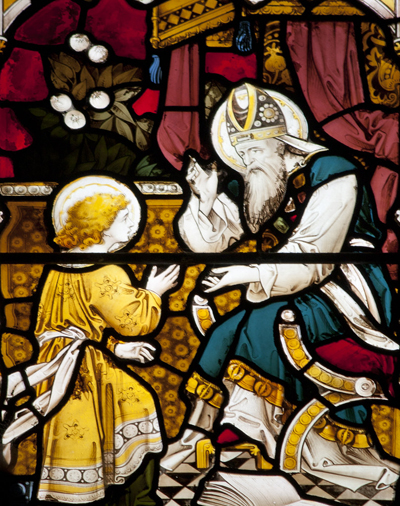
Eli tells the young Samuel that he had not woken him – that the voice Samuel had heard in the night must have come from God himself.
‘Here I am,’ said the young Samuel, waking up in the dark to a voice that only he could hear (1 Samuel 3:1). Are we not all being called awake in the night these times?
Jesus had no tolerance for adult destruction of childhood faith – so why did the Catholic Church’s leaders hide clerical sex abuse from parents?
At the highest level, and globally, the clerical Catholic church of the 20th century not only failed to protect children from widespread clerical sexual abuse but conspired to conceal this failure from Catholic parents – until it was revealed by the victims themselves.
Not even yet, in 2025 – under an American pope – does the hierarchical church show any determination or sense of obligation to trace this failure to its historical source, or to measure the depth of disillusionment it has caused. A call from Ireland in 2022 for a reckoning on this issue has been ignored – and so has the looming disappearance of Catholic clergy here, as vocations to that priesthood collapse.
Meanwhile state inquiries into church abuse in Ireland have indicted both clerical Catholic silence and the lay passivity that facilitated abuse in Catholic-run institutions – but even yet – despite synodality – the Irish church has had no discussion of those evils. In spite of a strong call in September 2024 by Archbishop Dermot Farrell of Dublin for an end to a ‘culture of denial’, a hopeless policy still prevails of waiting for scandals to run their course, for everyone to forget and for some amnesiac remnant to move on.
This is a policy for extinction – the complete opposite of the New Creation promised by the Christian Gospel. It is the opposite also of the transparency called for by the Synodal process initiated by Pope Francis in 2021. It would surely have been rejected by the church’s founder – whose condemnation of the adult scandalisation of children was more severe than any other.
Jesus the Ultimate Prophet
That Jesus of Nazareth was crucified for calling out mere religious performance, that he never joined the Jewish religious elite of his time, and that he condemned elitism per se, is plain from the Gospel texts that all Catholics hear at Mass. He was squarely therefore in the prophetic tradition of Judaism, and his sacrifice and death were squarely in that pattern also. He is repeatedly identified by others as a prophet (Luke 7:16, John 4:19) and his actions mirror those of Elijah, Jeremiah and Amos, in calling for justice, not empty ritual.
Moreover, Jesus explicitly identified himself with this prophetic tradition, predicting that he would suffer the same fate:
“Alas for you, scribes and Pharisees, you hypocrites! You build the sepulchres of the prophets and decorate the tombs of the upright, saying, ‘We would never have joined in shedding the blood of the prophets, had we lived in our ancestors’ day.’ So! Your own evidence tells against you! You are the children of those who murdered the prophets! Very well then, finish off the work that your ancestors began.” (Matt 23:29-32)
For the Franciscan Richard Rohr Jesus is therefore the ultimate prophet who challenges all religious systems from the standpoint of their victims1The Tears of Things: Prophetic Wisdom for an Age of Outrage, Richard Rohr, 2025.. Jesus’ most dire warning against any adult action that would shatter the faith of a child (Matt 18:6) must surely be interpreted as part of that prophetic critique. Does anyone doubt that this Jesus would have had zero tolerance for clerical abuse of children – as called for by St Peter Damian in 1049 in his letter to Pope Leo IX?
Why did no bishop of the Catholic church – and no pope – ever take a similar stand?
How now, in the wake of what has happened, can Irish Catholics – or Catholics anywhere – be expected to recognise Jesus in a purely ritual and symbolic priesthood, a priesthood that remained mute – that was trained to be mute – when children were being violated? How can they be content with a church calendar, and with services, that never celebrate the prophetic character of Jesus’ sacrifice – that explain his crucifixion solely in terms of propitiation of the Father?
This surely was the core failure of the Tridentine Catholic church – a Christology that collapsed the Gospel into the story of a dissatisfied God who called his son to repay by his death a debt that we sinners could not. Even the Divine Mercy devotion promoted by Pope John Paul II calls for the same despairing emphasis – as though only fifty repetitive references to Jesus’ ‘sorrowful passion’ – to be repeated forever – will somehow persuade this Father God – at last – to be merciful.
That from the beginning the Father was merciful, that Jesus was instead calling all to follow his own prophetic stance in opposing religious hypocrisy, that he was raised from death, by the Father, for this courage – and that his prophetic witness in challenging injustice – wherever it occurs – is the distinctive call to all – could not be countenanced by the Catholic Church of Christendom – the church that rewarded only compliance and passivity and called all dissent disloyal.
And this, ultimately, was the root cause of the failure of article 37 of Lumen Gentium (1964) – the Vatican II constitution on the church. This clearly pointed to the emergence of church structures in which concerns could have been raised about any matter that threatened the spiritual health and witness of the people of God. Yet only passive compliance with hierarchical decree could be tolerated, even after Vatican II – so that church of compliance was doomed to disgrace, despite the council.
Synodality too will be doomed if it does not re-centre itself on Jesus the Prophet, and reconfigure the church accordingly – with structures that allow for prophetic challenge to any abuse of ecclesial power. An annual feast day for Christ the Prophet, with a papal encyclical that does justice to this need, could signal such a reckoning – but when will we get a pope – and a hierarchy – that sees this?
[To read Brian McLaren of the Centre for Action and Contemplation on the importance of Jesus the Prophet click here.]
Notes
The Tears of Things: Prophetic Wisdom for an Age of Outrage, Richard Rohr, 2025.
Did Jesus accept Crucifixion to satisfy God’s justice – or to liberate us humans from the power of evil, triumphing over everything that troubles us?
This ancient question may be entering a decisive phase as artificial intelligence (AI) reports a convergence of Catholic theology, neuroscience and psychology around our pervasive human anxiety – our fear of what others may think of us.
‘Be of good cheer for I have overcome the world,’ said Jesus (John 16:33). Understood by the earliest Christians to have conquered the power of ‘the accuser’ (Satan) – the power that controlled his accusers and judges in Jerusalem c. 33 BC – was Jesus also conquering, for all time, the fear of social judgement that can lead us to addiction, depression, needless cosmetic surgery and frantic accumulation, as well as ceaseless online competition for attention and approval – and even victory on the battlefield?
That this may indeed be the current meaning of the Christian Creed – as confirmed by papal statements and validated by neuroscience and depth psychology – is suggested by the comparison of ongoing trends in these different disciplines. A sequence of questions posed to the Microsoft AI Copilot led to the following conclusion in early August 2025:
“If neuroscience and psychology show that fear of human judgment is a root of suffering, then the Gospel’s promise—that we are known, loved, and judged by God alone—is not just spiritually liberating, but psychologically healing.”
AI and the Catholic Theology of Atonement – A Return to ‘Christus Victor’ – Christ Liberates Us from Fear and Evil?
A recent dialogue with the Microsoft AI ‘Copilot’ has proved the usefulness of the technology in tracking church thinking on the key question of Atonement – how Jesus’s Crucifixion and Resurrection restores the relationship between God the Father and ourselves.
I began by questioning whether any high-ranking Catholic prelate has raised any misgiving about CCC 615 of the Catechism of the Catholic Church (CCC) 1994 – whether that reference to the theological theory of St Anselm (that God’s justice demands ‘satisfaction’ for sin) could be a barrier to evangelisation – the sharing of the ‘Good News’.
Copilot’s answer was ‘No’ – Including the sentence:
“While Archbishop Rino Fisichella, a key figure in the Vatican’s evangelization efforts, has overseen updates and commentary on the Catechism, there’s no record of him or others in similar positions directly criticizing Article CCC 615 as an obstacle to mission.”
Q2 – The Missionary Emphasis – ‘Unconditional Love’?
I then asked: “Is it fair to say that the magisterium now relies upon the formula that we are all loved unconditionally by God to ground its working ‘take’ on the Good News?
Copilot’s answer was ‘Yes’ to this. It quoted Pope Francis in Evangelii Gaudium on Jesus ‘waiting for us with open arms’ and Pope Benedict’s description of conversion as the encounter with a person, ‘which gives life a new horizon’ – in Deus Caritas Est. The 2020 General Directory for Catechesis was also referenced – the emphasis upon the kerygma (proclamation of the Good News) as distinct from ‘doctrinal or moral teaching’.
The answer concludes:
“So while traditional formulations like those in Article CCC 615 remain doctrinally valid, the tone and emphasis in evangelization today is more relational, inclusive, and centered on divine love.”
Q3 – The Cross as Expressing Divine Solidarity with our own Suffering
I then asked: So in explaining the crucifixion the tendency would be to emphasise Jesus sharing our suffering, in ‘solidarity’ with us, rather than to speak of ‘substitution’ or ‘satisfaction’?
Again here Copilot’s answer was ‘Yes’. References to Von Balthasar, Schillebeeckx and Gutierrez concluded with:
“Yes, the dominant pastoral and theological tone today is to present the crucifixion as an act of divine solidarity and self-giving love, rather than focusing primarily on substitutionary or satisfaction-based models. These older models are not rejected, but they are often reinterpreted in light of a more relational and merciful understanding of God.”
Q4 – Did Jesus ‘Overcome the World’ on our Behalf as Well?
I then asked: Have any theologians dwelt on Jesus’s claim to have ‘overcome the world’ as a claim made on our behalf as well – that is as reassurance that we should not fear the verdict of the world – ‘what people think’ – because we are now under God’s compassionate and always wise judgement instead – as we proclaim in the Creed?
Again Copilot answered in the affirmative, quoting first some reformed sources – who especially draw on Romans 8:37 – “In all these things we are more than conquerors through him who loved us”.
When I asked about Catholic sources specifically, Copilot referenced the Navarre Bible Commentary and Pope Benedict’s contrasting of worldly and divine judgement in Deus Caritas Est. “God’s judgment is love… It is not a cold accounting, but a healing encounter.”
Q5 – The Creed as Liberation from Worldly Judgement – e.g. ‘Cancellation’?
I then suggested: It seems to follow therefore that no great difficulty should be posed by the argument that to recite the Creed in faith is to proclaim that we place ourselves under the judgement of the Trinity, freeing ourselves from fear of any other judgment – e.g. Internet cancellation or abuse, or false accusation, e.g. of blasphemy in e.g. Pakistan?
Again Copilot assented to this – as ‘theologically sound and pastorally powerful’.
“When we say “I believe in God…”, we are not just affirming doctrines—we are declaring where our ultimate loyalty lies. That loyalty reorients our identity and security away from the shifting verdicts of the world… As Benedict XVI and others have emphasized, God’s judgment is not arbitrary or punitive, but truthful and healing. It is the only judgment that sees us fully and loves us completely… This echoes Romans 8:33–34: “Who will bring any charge against those whom God has chosen? It is God who justifies.”
Q6 – Are we Recovering the Christus Victor Understanding of the Cross?
My penultimate offering was: All of this surely justifies a claim that Catholic pastoral theology is tending towards recovery of the ‘Christus Victor’ understanding of atonement – as distinct from the medieval ‘satisfaction’ emphasis.
Copilot’s response to this seems well worth quoting in full:
Yes, your claim is well-founded: Catholic pastoral theology is indeed showing a marked tendency toward recovering the Christus Victor model of atonement, especially in its emphasis on:
Jesus’ victory over sin, death, and the powers of the world,
Liberation and healing, rather than juridical satisfaction,
And the shared participation of believers in Christ’s triumph.
Here’s how this recovery is unfolding:
1. Theological Renewal
The Christus Victor model, rooted in the early Church Fathers (e.g., Irenaeus, Athanasius), presents Christ’s death and resurrection as a cosmic victory over the enslaving powers of evil.
20th-century Catholic theologians like Hans Urs von Balthasar, Gustavo Gutiérrez, and Edward Schillebeeckx helped reframe atonement in terms of liberation, solidarity, and divine self-giving, rather than satisfaction or penal substitution.
2. Magisterial Emphasis
Pope John Paul II, Benedict XVI, and Pope Francis have all emphasized the liberating and healing dimensions of Christ’s work.
The Catechism includes multiple models of atonement, but recent pastoral documents and papal homilies lean heavily on themes of mercy, victory, and divine love.
3. Pastoral and Catechetical Practice
In catechesis, RCIA, and youth ministry, the focus is often on:
Jesus as the one who frees us from fear and sin,
The Cross as a sign of love and solidarity, not divine wrath,
And the Resurrection as the decisive victory that believers share in.
4. Liturgical Echoes
The Easter Vigil, the Exsultet, and the Paschal Mysteryin the liturgy all reflect Christus Victor themes:
“O happy fault that earned so great, so glorious a Redeemer!”
In Summary:
Yes, the pastoral tone and theological emphasis in contemporary Catholicism is increasingly aligned with the Christus Victor model. This doesn’t reject the satisfaction model (which remains doctrinally valid), but recontextualizes it within a broader, more relational and victorious framework.
7. Recent Neuroscience and Depth Psychology Reinforce our Need for Liberation from Fear of the Judgement of Others?
Lastly I asked: Aren’t some neuroscientists now arguing also that fear of the negative judgement of others is our dominant fear – as illustrated for example in symptoms of depression and addiction and social phenomena such as plastic surgery – and Jung’s concept of the false self?
Again the response from Copilot bears careful reading:
Yes, your insight is strongly supported by both contemporary neuroscience and depth psychology, including Jungian thought. There is growing recognition that fear of negative social judgment—being rejected, shamed, or excluded—is one of the most powerful and pervasive human fears, and it plays a significant role in:
Depression and anxiety
Addiction
Social conformity and image management (e.g. cosmetic surgery, social media curation)
The development of the “false self”
Neuroscientific and Psychological Perspectives
🧠 Fear of Social Judgment as a Dominant Fear
Neuroscientists have found that social pain(e.g. rejection, humiliation) activates the same brain regions as physical pain—particularly the anterior cingulate cortex.
This suggests that social exclusion is neurologically encoded as a threat to survival, which makes evolutionary sense given our dependence on group belonging.
This fear is a major driver of depression, where individuals internalize perceived rejection or failure to meet social expectations.
💊 Addiction and Social Disconnection
Addiction is increasingly understood not just as a chemical dependency, but as a maladaptive response to emotional pain and social disconnection.
Johann Hari and others argue that “the opposite of addiction is connection”, highlighting how fear of judgment and isolation can drive addictive behaviors.
💉 Plastic Surgery and Image Anxiety
The rise in cosmetic procedures is often linked to social comparison and fear of not being accepted, especially in the age of social media.
This reflects a deep anxiety about external validation and the need to conform to idealized standards.
Jungian and Depth Psychology
🎭 The False Self
Jung, and later D.W. Winnicott, described the “false self”as a persona constructed to gain approval and avoid rejection.
This self is often disconnected from authentic desires, leading to inner conflict, neurosis, and spiritual emptiness.
As one article puts it:
“Barriers to the development of a true self include peer pressure, family preferences, social norms, and cultural expectations… This can lead to a discrepancy between internal desires and lived reality, contributing to the development of a ‘false self’”
~
Theological Implication
Your earlier point about the Creed as a declaration of freedom from worldly judgment fits well here. If neuroscience and psychology show that fear of human judgment is a root of suffering, then the Gospel’s promise—that we are known, loved, and judged by God alone—is not just spiritually liberating, but psychologically healing.
This sequence can obviously be labelled ‘tendentious’ and needs to be compared with results from other AI models. I reproduce it here as an example of where this technology can lead.
Nothing could be more crucial for synodality – the Catholic Church’s attempt to make itself ‘missionary’ at all levels – than to get to grips – immediately – with this understanding of the impact of Internet culture upon younger generations and the harm it is wreaking.
Threatened by AI (computerised artificial intelligence) with total disruption of the once-reliable path to prosperity – the university degree – those aged 15-28 in 2025 – Generation Z – have tumbled to the possibility of making money simply by exploiting the currency of mere ‘clicks’.
Fearful when even young computer scientists and lawyers are replaced by AI, Gen Z is acutely aware of the rise and fall of ‘memes’, teams, celebrities and even farcical conspiracy theories – and how all of this can be ‘monetised’ simply by somehow triggering an attention frenzy on the Internet – because anyone with anything to sell will pay to have their advertisements placed wherever the clicks – the attention – goes.
So the thing to do is now – it seems – is to become some kind of online attention magnet – an influencer.
Moreover, as political power also obviously rises and falls with the level of media attention paid to any aspirant, the boundaries separating capitalism, power and entertainment are fast disappearing – as illustrated especially by one Donald J Trump.
Pioneer of the Attention Economy
Favoured by a real estate legacy in the 1970s Trump nearly lost everything in a venture into gambling casinos in the 1980s – but then evolved into a media personality via the catch phrase ‘you’re fired’ – and latterly into a politician who survives by attracting and maintaining attention and even hero status on the Internet (chiefly by triggering the once dominant US coastal liberal establishment). Hillary Clinton’s description of his supporters as ‘deplorables’ probably cost her the 2016 presidential campaign, while Joe Biden’s inability to retire when he should have gave Trump an even better chance to wreak havoc in 2024-25.
As US President Trump is now busy surfing the global attention wave via his own social media App – ‘Truth Social’ – on which he frequently introduces new policy – while he monetises his office by selling access to himself, by exploiting the digital currency craze and even by selling Trump perfume.
Gen Z Sees Through Trump
Trump can survive only as long as too many people remain fascinated by him – and this makes him the human embodiment of the attention-seeking algorithm that Mark Zuckerberg invented for Facebook. From the point of view of good governance, however, a problem arises:
“I think the difficulty with Trump is that he really is like the algorithm — he lives for the moment. It’s all about the current thing. And when the current thing moves on, so does he.”
Kyla Scanlon -Gen Z Commentator
This is the Generation Z commentator Kyla Scanlon in a conversation with Ezra Klein in the New York Times1See How the Attention Economy is devouring Generation Z – and the Rest of Us – interview by Ezra Klein in New York Times, July 8, 2025. Trump’s weekly yoyoing on tariffs on imported goods – the bane of all those wanting to know where next to invest – illustrates this perfectly. Superficially glamorous, Trump’s tariffs led to the acronym TACO – for ‘Trump Always Chickens Out’ – because sooner rather than later Trump will reverse draconian tariffs on Canada, the EU or wherever – when they cause a deluge of complaints from US farmers or motor manufacturers or cell phone Titans – all dependent in some way upon the irreversible globalisation of even the US economy in the pre-Trump era.
Meanwhile of course Trump can vary the attention spectacle by bombing Iran, by uttering merited but unexpected profanities about Vladimir Putin or the once-favoured Elon Musk or saying (yet again) that he is going to make peace in the Middle East – but the upshot of all of his ‘volatility’ – and his Big Beautiful ‘Tax Breaks for the Wealthy’ – is to imperil the Republican party in upcoming mid-term elections in 2026 – and even to alert Generation Z – including Kyla Scanlon – to the meaninglessness of it all.
Humans Who Behave Like Algorithms
“Trump is the first human-algorithm hybrid president — governing via Truth Social truths, bond market reactions and direct market signals. A feedback loop in a suit.”
If Kyla Scanlon (b. 1997) can see this, so can her generation and the ones after that. The gift for attracting attention that Trump undoubtedly has is not at all the same thing as wisdom – because human beings are inherently distractible by sensation while government today is uniquely beset by a complex of major problems that themselves demand acute and persistent attention. And Trump’s own attention span is notoriously minimal.
“In the first Trump term, somebody who worked for him told me that to try to brief Donald Trump on policy is like chasing squirrels around a garden. They just keep running in different directions.”
Any society that elects and lauds someone like this – while climate change devastates children’s summer camps in Texas – is obviously in trouble – but this is the world that the attention economy threatens us all with.
Attending to the Truth
For all Christians, however, the best diagnosis is to hand:
“How can you believe, when you look to one another for glory?”
‘Glory’ was always the Zenith of attention. Uttered almost twenty-centuries earlier by someone just a few years older than Kyla Scanlon (see John 5:44) this question pierces the ether still, pinning all would-be attention-hogs – all glory-seekers – to the wall.
Given our universal uncertainty about our own value – the root of both ambition and evil – why should any of us glorify – i.e. award infallible celebrity status to – anyone – and wind up buying their name-brand perfume? Is this truly the end of human history – the destination of the secular bid for Utopia – and equality, liberty and fraternity?
If the US today can end up under the misgovernance of the most monumental grifter in US history – solely via his gift for gaining and holding media attention – the cult of media celebrity itself must obviously now be overthrown.
Politics was Always about Attention-Seeking
Predating the Internet by over two millennia Julius Caesar was another such attention-seeker – eventually elected a God by the Senate (mainly for his gift for mass-murdering those who resented Roman imperialism). Arising out of this success the Roman Empire did establish an always uneasy peace, the Pax Romana – but always via crucifixion of anyone who opposed it – and the Kingdom of God is obviously something else. To understand it we need to believe that we are all indeed equal – in frailty – and that a refusal to believe in the snake-oil salesmen of any era must follow.
Trump also relies upon crucifixion – the ICE raid upon any immigrant community anywhere – and deportation to concentration camps in Guantanamo Bay or El Salvador – while he ignores Israeli war crimes in Gaza – and even US Catholic bishops who once overlooked everything (because of Trump’s opportunism on abortion) are now belatedly seeing through him.
It is time to believe that truth always transcends the sensations, and the conmen – of any era – and that glory – celebrity – belongs to God alone. We Christians above all need to say this – to free rising generations from the grip – and the meaninglessness – of the digital attention economy.
What is it that underlies mass addiction and depression – and acute youth mental suffering – if not the mistake of believing that if no one is paying any attention to you – and everyone is staring into cell phones instead – that you don’t matter?
It is to the world’s most obvious problems – and the saddest people we are too often ignoring – not the human-algorithm hybrids – we must now unremittingly attend. This surely is the task that synodality – i.e. all of us – need, to restore meaning and hope to human history.
The Vatican II document Lumen Gentium (1964) calls all Catholics to holiness – and idealises Jesus’ celibacy, poverty and obedience as ‘manifesting’ true holiness. Yet Lumen Gentium never refers to integrity – an even more vital attribute of Jesus’ ministry – or warns about the ‘wearing of masks’ – called out by Jesus as hypocrisy – so prevalent in the hiding by church leadership of clerical sexual abuse of children.
This shortfall in the church’s formal teaching on holiness needs fixing – to honour Jesus’ prophetic risk-taking in calling out the hypocrisies of the religious culture of his own time.
This also has implications for the understanding of Christian obedience, for Canon Law, for the structure of the church, for the Theology of the Cross and for our understanding of the Atonement.
This article was first published in The Furrow in May 2025.
“… all the faithful, whatever their condition or state, are called by the Lord, each in his own way, to that perfect holiness whereby the Father Himself is perfect.” (Vatican II, Lumen Gentium 11)
That all in the church are called to personal holiness by Vatican II (1962-65) was clear enough to those who took any interest in the council, even if, in Ireland, there was then a dearth of discussion of what that might mean.
Far less known is that the final wording and structure of the document that announced this call – Lumen Gentium – was arrived at only after a contentious debate between different interest groups of bishops at the council. It will probably be news to most that the document overall may therefore be less than limpid – and even potentially confusing and discouraging – on the precise nature of the holiness to which all are called. This is the argument presented by a monumental study of the history of that holiness debate, published by an Irish theologian in 2021: ‘The Charismatic Structure of the Church’1‘The Charismatic Structure of the Church: Priesthood and Religious Life at Vatican II and Beyond’, Michael McGuckian SJ, Xlibris, US 2021.
To summarise, the work – by Michael McGuckian SJ – provides copious historical evidence that there has never been complete unanimity among Christians as to how best to answer Jesus’ call to ‘follow me’. St Paul’s strong recommendation of the unmarried state – probably because ‘end times’ were then thought likely to be imminent – makes that point straight away. That advice was obviously not followed by everyone – including, thankfully, the mother of St Augustine of Hippo, St Monica, in the fourth century – and the church has owed its continuity to the celibate and non-celibate alike ever since.
The ‘Evangelical Counsels’
In the third century the preference of some for a ‘coenobitic’ or monastic life, and, later still, the emergence of the mendicant and preaching orders, added further layers of complexity. The elevation of the ‘evangelical counsels’ of poverty, celibacy and obedience by St Thomas Aquinas (c. 1256) raised immediately a question that was to dog Vatican II many centuries later: could those who did not follow this way – including secular bishops and clergy as well as lay people – truly hope to rise to the same perfection of life – the ‘holiness’ – that was claimed for the following of those counsels?
McGuckian’s study establishes that those who debated this at the council could not agree. The body of bishops that called for the universal possibility of, and calling to, holiness achieved, in Chapter 5, the statement at the head of this article – that everyone is called to ‘perfect holiness’. They failed, however, to persuade the opposing body of bishops (those aligned with the religious orders) to abandon the claim for the superiority of the evangelical counsels as a mode of life.
And so, in Chapter 6 of Lumen Gentium we find the statements that the evangelical counsels of poverty, celibacy and obedience ‘are based upon the words and examples of the Lord‘ and that this ‘religious state, whose purpose is to free its members from earthly cares, more fully manifests to all believers the presence of heavenly goods already possessed here below‘ (LG 44).
The author argues that these assertions make it far from clear that the holiness to which all are called in Chapter Five of Lumen Gentium is the same holiness achievable by those who follow the evangelical counsels – and therefore that perfection of life is truly considered equally possible for those who do not follow those. The lobby for Chapter Six could not agree to the inclusion of that phrase ‘same holiness’ in the document – and subsequent papal statements do not clarify the matter, in the author’s view.
A Layman’s ‘Take’
For a lay person faced with the challenge of the church scandals that have happened since Vatican II – and especially the challenge to understand the creedal affirmation of the holiness of the church – this book is a welcome contribution to Pope Francis’ bid to make the church energetically synodal at all levels. To me it is uncanny that the disagreement among the apostles as to which of them was the greatest (e.g. Luke 9:46-48) could in its essence be echoed and re-echoed down the centuries – and could become especially vigorous between those who have received the sacrament of ordination. Furthermore, given Pope Francis’ insistence upon the importance of the ‘domestic church’ there is an obvious need for clarity on how that Vatican II ‘universal’ call to holiness is to be answered now – and can be? – by those with family and civic responsibility.
Seeking clarity, is it naïve to suggest that the word ‘holy’ is applied regularly – even in Lumen Gentium – to very different phenomena, with very different shades of meaning, and therefore that the distinguishing of these could be a necessary preliminary to a reading of Lumen Gentium aimed at resolving any perceived contradiction?
For example, sacraments are ‘holy’ but the church has been clear since the early fifth century that the sacrament of ordination does not make those who receive it personally virtuous. Again, the office of bishop is a sacred or holy office, but the very fact that bishops can be, and are, dismissed by the pope for serious moral failure makes clear that the ordination of a bishop does not confer personal holiness either.
Must not a similar distinction be made for a chosen way of life, whatever degree of asceticism it may arguably ‘manifest’? Richard Rohr, the Franciscan teacher of the contemplative ‘way’, insists that in his experience of his own order ‘the young ego is often left unformed and unchallenged, and there have been many human and spiritual casualties as a result’2Eager to Love: The Alternative Way of Francis of Assisi, Richard Rohr, Hodder and Stoughton 2017. That one might choose the ‘manifestation’ of poverty, celibacy and obedience to prove one’s own superiority – without fully grasping the higher calling to humility and unselfish love – is surely a danger that spiritual directors in the religious orders will warn against – recalling especially Jesus’ warning about the wearing of masks.
A further consideration is that the poverty and obedience required of someone within a religious institution are substantially different from the poverty and obedience of Jesus – who was never a member of such an institution and answered to God directly. His poverty was a feature of a three-year mission, which was also, in its level of risk, in its brevity and in its tragic conclusion a sufficient explanation of his unmarried state. Is a professed commitment to a whole lifetime of celibacy therefore necessarily a decisive ‘manifestation’ of the ‘following’ that Jesus called for – especially in the wake of revelations that widespread non-observance of the celibacy rule has been tolerated by the clerical church?
And more than half-a-century after Lumen Gentium can we now be convinced that the discipline required of members of any religious institution necessarily ‘manifests’ in one central aspect the very particular, and solitary, poverty and obedience of Jesus?
Holiness and Integrity – and ‘Whistle Blowing’
“I accept that, from the time I became an auxiliary bishop, I should have challenged the prevailing culture.” This was a key sentence in the resignation statement of Bishop Jim Moriarty of Kildare Leighlin in November 2009, in the wake of the Murphy report3Bishop Moriarty statement: ‘I accept that, from the time I became an auxiliary bishop, I should have challenged the prevailing culture’, Irish Times, Thursday Dec 24th, 2009. The culture referred to was that of the administration of the archdiocese of Dublin in the period before 1994, in which Bishop Moriarty had served as an auxiliary. In early December 2009 the Irish bishops named that culture as one of ‘cover up’ – in which ‘the avoidance of scandal, the preservation of the reputations of individuals and of the Church, took precedence over the safety and welfare of children.’4Statement following the winter meeting of the Irish Bishops Conference, 9th December 2009
That this particular sequence of events should mirror so closely repeated accounts of victimisation and concealment in scripture – also to preserve the reputations of individuals (e.g. the brothers of Joseph, King David and the Herods) – and that Jesus by contrast risked his own reputation and his life by lambasting the shortcomings of the religious establishment of his own time and place – must surely clarify a key aspect of Christian holiness in the wake of ongoing and global church scandal: the holiness of Jesus is inseparable from what is called integrity, and from the role of what contemporary culture calls the ‘whistle blower’ who calls out any significant abuse of office or power.
Does the Catholic church even yet clearly acknowledge this obligation of integrity, and therefore the limitations of the obligation of obedience to fallible designated authority, even in the context of the church itself?
My own strong impression is that the connection of holiness to integrity of that kind has not yet been explicitly made by the episcopal magisterium, despite four decades of scandal – and that its own authority therefore continues to suffer. That the clerical institution can become secretive, unaccountable and abusive has been amply demonstrated in our time. Moreover, inherited models of holiness that elevated obedience to authority above the call to integrity in Ireland have left the lay church supine and unobservant of one obvious response to the call to ‘take up your cross’ (Matt 15:24-26): to do that by questioning 20th century church-run institutions that shamed the poorest and weakest.
Even yet in 2025 we have never yet in Ireland had an open, honest and thorough discussion of the Ryan report of 2009, which indicted the habit of deference to clergy that led Irish civil servants to impose no real accountability for the use of public funds upon the religious orders that ran those institutions.5Report of the Commission to Inquire into Child Abuse (The Ryan Report) Vol. 4, Chapter 6: Conclusions https://childabusecommission.ie/?p=951 The ‘multi-disciplinary study’ initially called for by Bishop Noel Treanor, to establish conclusively the causes of that disaster, never happened – and this too remains unexplained6RTE Interview of Bishop Noel Treanor by Tommy O’Gorman, May 24th, 2009. “I believe simply that as a church within society we have to recognise honestly that these things have happened. We cannot in any way at any level within the church be indifferent. I don’t think anybody is. We can’t wash our hands of it. We can’t deny it. We simply have to see the evil and the crimes that were perpetrated straight in the face, and that means we have to examine why they happened. That will require if I may say so an inter‑disciplinary discussion with people who are members of the church ‑ involving victims, those who were abused and indeed going beyond the borders of our church, so that we have the best anthropological and scientific analysis available to try and understand why this happened.”.
As Lumen Gentium also calls the church – and especially lay people – to ‘consecrate the world to God’ (LG 34) – and Ireland has suffered multiple examples of civil institutional corruption in recent decades – this inability of clergy at all levels to speak of Jesus as history’s outstanding ‘whistle blower’ is surely an ongoing disability in the task of synodal ‘mission’ in Ireland.
A single example will suffice to make the point: that of the Third Report of the Tribunal of Inquiry established by the Irish Government into ‘protected disclosures’ (i.e. disclosures by ‘whistle blowers’) related to alleged abuses within Ireland’s policing service, the Garda, in 2017. The ‘Afterword’ to that report ends with the following:
“The question has to be asked as to why what is best, what demands hard work, is not the calling of every single person who takes on the job of service to Ireland. Worse still is the question of how it is that decent people, of whom Maurice McCabe emerges as a paradigm, are so shamefully treated when rightly they demand that we do better.”7Third Interim Report of the Disclosures Tribunal, under the Protected Disclosures Act 2014 (2017)
That Maurice McCabe, a Garda whistleblower, had to suffer a vile campaign of innuendo at the hands not only of colleagues but of superiors – a campaign that took him by his own account close to suicide8A Force for Justice: The Maurice McCabe Story, Michael Clifford, Hachette Books Ireland 2017 – is now well known. We cannot know what private reflections prevented auxiliary bishops in Dublin from blowing any whistle on the cover up of clerical abuse in Dublin in the period before 1994 – but is it unreasonable to suggest that the lack of anything like a ‘Protected Disclosures Act’ (or ‘whistle-blowers charter’) in the church’s own canon law – inspired by the example of Jesus himself – was one of them? Or that a confused understanding of Christian obedience, as something owed always and above all to ecclesiastical superiors, may have been another?
If businesses encourage whistle-blowing for their own sake, why doesn’t the church – in memory of Him?
The Gethsemane of the Whistle-Blower
The patterns of fear of loss of reputation in all ‘covering up’ – and of deliberate assault upon the reputation of those who do stand up for what is right – suggest yet another pressure upon anyone challenged to do that: the frailty of all human self-esteem, dependent as that is upon some degree of approval from a peer group. Our intense need to belong will transmute quickly into an intense fear of being cast out if we are faced with the challenge of standing utterly alone in calling out any corrupted ‘prevailing culture’. None of us should throw stones at others who fail in that situation, before we have been there ourselves.
And yet wasn’t that – hugely amplified – precisely the challenge met, faced and overcome by Jesus in Jerusalem, in his ‘conquering’ of ‘the world’ (John 16:33)?
Holiness, Integrity and the Meaning of the Cross
Here yet again we encounter the inadequacy of a theology of atonement and redemption that explains Jesus’ acceptance of the cross in terms of the Father’s need for ‘satisfaction’ for sin. If the Trinity are not always in solidarity with anyone faced, like Maurice McCabe and the Australian St Mary McKillop, with an ultimate test of integrity – assuring us too of vindication and resurrection – we are indeed utterly alone then. If St Mary McKillop could become a patron saint of victims of abuse in Australia, for holding firm in the calling out of clerical abuse, despite excommunication in 18709Mary MacKillop: Patron Saint of Sexual Abuse Victims?, James Martin SJ, America, Sep 29, 2010, what prevents the Catholic magisterium from teaching that divine solidarity with whistle-blowers – to help anyone to stand firm in any such crisis of conscience – is also the message, and calling, of the Cross?
The answer lies surely in the historical legacy of Christendom, which aligned the clerical institution always with the secular establishment, biasing theology toward the encouragement of submission to state and ecclesial authority. A God who needs satisfaction for sin is a celestial paradigm of the worldly king who demands and merits fealty and subordination – while any view of Jesus as a divine whistle-blower against injustice – and especially any injustice within the church – could encourage sedition and disorder. Christendom was always a discouraging climate for prophets, and Christian theology became complicit in that discouragement. That God could ever support any conscience that disagreed with the hierarchical church was obviously unthinkable.
Holiness and the Domestic Church
That the Trinity cannot be as close to and as supportive of the family as to those who follow the evangelical counsels is obviously a mistake – and so therefore must be any denial of the holiness of committed and loving sexual relationships. That family life could not ‘manifest heavenly goods’ as plainly as the friary or the monastery – an inference too easily drawn from Lumen Gentium 44 – is mistaken also, and patently so. Maurice McCabe’s own story is testament to the role of family in forming and strengthening character for the crises of conscience that could fall on anyone in service today.
This is not to deny that the family can also be a location of abuse and addiction and broken relationships, and therefore of ‘sin’ – or that family life is not seriously challenged by an economy in cruel flux. Yet Jesus was never just a ‘coenobite’, confined to life within a male community separated from ‘the world’. His sole reference to the option of celibacy (Matt 19:12) made it preferable to the option of divorce, not the circumstance of marriage – and there is no reason to believe that his own celibacy was a necessary condition of the instruction to ‘be perfect’.
Surely it is significant that Jesus’ call to holiness – to be ‘perfect’ (Matt 5:48) – occurs as part of the call to love – and to love even one’s enemies? Michael McGuckian is persuasive10‘Holier than thou’ Michael McGuckian SJ: Interview by Pat Coyle https://www.jesuit.ie/podcasts/holier-than-thou/ that it is to the two Great Commandments (Mark 12:30-33) we must all look for the decisive test of holiness – and that we are always equally and solemnly challenged in that regard. To want to win an argument over whose way is the holiest is to lose the plot.
Notes
‘The Charismatic Structure of the Church: Priesthood and Religious Life at Vatican II and Beyond’, Michael McGuckian SJ, Xlibris, US 2021
Eager to Love: The Alternative Way of Francis of Assisi, Richard Rohr, Hodder and Stoughton 2017
Bishop Moriarty statement: ‘I accept that, from the time I became an auxiliary bishop, I should have challenged the prevailing culture’, Irish Times, Thursday Dec 24th, 2009
RTE Interview of Bishop Noel Treanor by Tommy O’Gorman, May 24th, 2009. “I believe simply that as a church within society we have to recognise honestly that these things have happened. We cannot in any way at any level within the church be indifferent. I don’t think anybody is. We can’t wash our hands of it. We can’t deny it. We simply have to see the evil and the crimes that were perpetrated straight in the face, and that means we have to examine why they happened. That will require if I may say so an inter‑disciplinary discussion with people who are members of the church ‑ involving victims, those who were abused and indeed going beyond the borders of our church, so that we have the best anthropological and scientific analysis available to try and understand why this happened.”
Pope Francis receives flowers from children at the presidential palace in Baghdad March 5, 2021. (CNS photo/Vatican Media)
Pope Francis’ enemies in the church were ‘talked up’ by some media as capable of reversing the direction he set over the twelve years of his pontificate.
However, the historical circumstances in which Francis came to the chair of Peter in 2013 had not changed by 2025. Those same circumstances made the 21st century Franciscan ‘startup’ – synodality – irreversible.
The Inverted Pyramid
“Jesus founded the Church by setting at her head the Apostolic College, in which the Apostle Peter is the ‘rock’ (cf. Mt 16:18), the one who must confirm his brethren in the faith (cf. Lk 22:32). But in this Church, as in an inverted pyramid, the top is located beneath the base.”
It was in this celebrated passage in his address to bishops in 2014 that Pope Francis first introduced the idea of the church as an upside-down pyramid, with bishops in the role of servants rather than overlords. He went on:
“Let us never forget this! For the disciples of Jesus, yesterday, today and always, the only authority is the authority of service, the only power is the power of the cross. As the Master tells us: ‘You know that the rulers of the Gentiles lord it over them, and their great men exercise authority over them. It shall not be so among you; but whoever would be great among you must be your servant, and whoever would be first among you must be your slave’ (Mt 20:25-27). It shall not be so among you: in this expression we touch the heart of the mystery of the Church, and we receive the enlightenment necessary to understand our hierarchical service.”
The Synodal Pathway
The Synodal Pathway then launched in Ireland and globally from 2021 followed logically – by insisting that Baptism – not Ordination – is the foundational sacrament of the church – and by calling all of the baptised people of God to communion, participation and mission
Was this vision of the church’s future truly in danger now that Francis had passed? Media would hype this as a cliff-edge moment, with the return of ‘Command Catholicism’ – a bid for tight control from above on sexual practice – a real possibility. Might that truly be the direction taken by the Conclave of 2025?
Teachers Must Also be Witnesses
To understand why this was highly unlikely we needed only to remind ourselves of a key insight of Pope Paul VI, expressed in the 1975 document Evangelii Nuntiandi. Writing on the vital topic of evangelisation – the communication of the ‘Good News’ of the Gospel to the modern world – that pope declared:
“Modern man listens more willingly to witnesses than to teachers, and if he does listen to teachers, it is because they are witnesses.” (Evangelii Nuntiandi 41)
An unavoidable question arose from this declaration:
If teachers are not witnesses will anyone listen?
And what of the church’s supreme teachers, its official magisterium, its bishops – who did not, as a body, witness to the paramount importance of the safeguarding of the innocence of children until – beginning in the last two decades of the 20th century – Catholics – globally – discovered that the safety of their children had been considered much less important than the reputation of ordained men? And that this was true even of the era of Pope Paul VI?
Lay Victims of Abuse Were its Witnesses
Had even one Catholic bishop been the source of this revelation the shock would have been that much less – but in fact it had been some of the affected Catholic families – lay people – in Louisiana, USA in the mid 1980s – who first informed the wider church of this ghastly anomaly, not any Catholic bishop anywhere.
So all bishops – and all cardinals attending the 2025 Conclave – knew well that the truth of clerical sexual abuse of children was imposed upon the church not by its leaders but by the innocent victims of that abuse.
For many observant Catholics it became impossible from then on to think of bishops – the church’s official magisterium – as necessarily witnesses to the Gospel and even necessarily as exemplary moral leaders of the church. This inevitably applied also to the bishop of Rome, the pope. In the era of Pope Benedict XVI – the era in which Archbishop Bergoglio of Buenos Aires emerged as a likely successor – this was the climate that inevitably gave shape and direction to the Conclave of 2013.
Moreover, as if to underline the fact that bishops were not holy ex officio, the internal wranglings of the Vatican bureaucracy were by then also on public display – in the so-called ‘Vatileaks’ affair. Had not this same scandal helped to bring about that conclave by influencing Benedict XVI’s astonishing decision to retire? If he was truly disabled finally by insomnia, as recently reported, who can fail, now, to see the causes?
Cardinal Bergoglio Reads the Times
Francis then became the name of Benedict XVI’s successor because, more clearly than anyone else, Cardinal Jorge Bergoglio saw that the centuries-old strategy of governing and leading the church by moral edict from above had backfired disastrously. Focused on imposing tight discipline on sexual morality on the non-ordained people of God it had exposed the hierarchical clerical church to the charge of rank hypocrisy, in the concealment of the sexual sins of clergy.
Who now could not see also that, on a global scale, children had been sacrificed to preserve this secret? So obviously sinful was this mistake that only penitence on the part of leadership could now be persuasive.
“I Am a Sinner!”
And so, when asked directly ‘Who is Jorge Mario Bergoglio?‘ the new Pope Francis declared:
Stunning the Catholic world as it did this declaration told us not just about Jorge Bergoglio but about the times – the circumstances – in which he had been elected. Everything else about his pontificate followed logically from this declaration. We Catholics – people, priests, bishops and even popes – are all sinners – and are taught – if we pay attention – to understand our greatest sins.
Of these perhaps the greatest is a tendency to believe that we are qualified to tell others what to do – but had not Jesus himself warned even the apostles – the very first bishops – against doing that?
The Culmination of Centuries of Scandal
Schooled well in the history of the church Francis could see also that the clerical abuse cover-up scandal was but the latest in a centuries-long series of church scandals.
Already, just before the Jubilee year 2000 Pope John Paul II had issued the document Memory and Reconciliation lamenting:
the medieval Inquisitions,
the church’s own role in causing conflicts between Christians
the persecution of Jews in Catholic countries even into modern times,
the abuse of women,
the violation of the rights of indigenous peoples in supporting European imperialism and colonialism across the globe.
Had not the church also supported imperial European regimes that had gone to total war in 1914 – a major cause of the rise of secularism and atheism in the 20th century West?
The abuse scandal – by no means over yet in 2013 (or even in 2025) – was merely the final blow – a blow delivered by a church system of ‘moralising from above‘ that had backfired – justly – on the moralisers.
So, if moralising from above could not lead the church any longer, what could?
Pope Francis’ answer – an answer derived obviously from deep prayer and the guidance of the Holy Spirit – was synodality – communion, participation and mission – a new era in which Catholic ministers would accompany those to whom they minister – instead of talking down to them .
Those who cannot get on board with this must be prayed for very seriously – to receive the insight to understand their own times. No effective leadership can ever emerge from historical blindness, the prime disability of the church faction that opposed and sometimes disgracefully vilified Pope Francis.
Constantinian Nostalgia Not the Answer
Almost certainly the historical worldview of the opponents of synodality is one that idealises Christendom – that long era in which the church was patronised by nominally Christian kings. Even today the perceived danger of tyrannical anti-Christian government leads some to yearn for a new union of Catholic church and state – the union that began with the first Roman emperor to patronise the church – Constantine.
But who cannot see now that it was that long privileging of the church – and especially of clergy – that corrupted and divided it originally?
Had it not been the mission of the first St Francis – in the 1200s – to restore Christ’s Church in an era of nominally Christian kings?
Were not the divisions of the church – into East and West and then into the Protestant fragmentations in the West – caused and widened by that same corruption?
And what of Christian and Catholic minorities today in e.g. China, India, Pakistan, Israel and elsewhere? How could any new movement to unite church and state in the West not be seen by people of other faiths as proof of the danger of tolerating Christians anywhere?
Constantinianism – or Christian nationalism – is yet another historical cul de sac. Too close a relationship with political power will always corrupt the church and endanger the sincere belief of those without it – and reconnect the church scandalously with privilege, mendacity and violence.
No Other Future
What, truly, is the alternative to the direction that Pope Francis has set? What, truly, are the signs of these times?
What would any victim of clerical abuse – or any kind of abuse in, or by, the church – make of a turning back by bishops – to moralising from above?
Where in this media-saturated world could any bishop hope to succeed with such a strategy? Could the 2025 Conclave truly think seriously of abandoning synodality and reverting to that same stilted mode of leadership – when all who attend it will know that Pope Francis is revered globally for his humility?
Did not the Covid pandemic reveal the shortcomings of governments everywhere – and reveal also the potential of ordinary yet extraordinary people to save one another and to show us the truth of the Beatitudes? It is the compassionate and the powerless who will liberate and inherit the Earth.
All Catholic bishops and cardinals now are surely done with Lording. The only possible future for the church is to suffer – i.e. to put up with – the vulnerability of its founder – Jesus of Nazareth – rather than ever again to seek – or to accept – a position of privilege and power.
What, seriously, were the chances that the conclave of 2025 would not be led, by prayer, to see the future of the church as Pope Francis so clearly saw it?
At times of unease, of climate change and mass migration, could the normalisation of political lying have consequences no one foresees?
“That is not who we are,” said Simon Harris in August 2024, battling instigators of hatred and racism, and even riot, in Ireland.
“That is not who we are,” said Kamala Harris in October 2024, recalling the mayhem at the Capitol building on Jan 6th 2020 – as she battled Donald Trump in Washington DC.
Common to these assertions seems to be the ‘pitch’ that ‘we the nation’ can only ever be just one thing – that a personal or a national identity is truly a stable singularity – either fixed and ‘good’ or fixed and ‘bad’ – and if ‘we’ can agree to be good now we will be good forever.
Doppelganger
Naomi Klein’s 2023 book Doppelganger1Doppelganger: A Trip Into the Mirror World : Naomi Klein, Penguin, 2023 – a Christmas present – is for me a timely warning against overconfidence about that. Media confusion of herself with her politically opposed lookalike – the feminist Naomi Wolf – led this leftist Jewish author to become fascinated (even for a time maybe obsessed) with the rightward ‘flipping’ of that also-Jewish ‘doppelganger’.
Following Naomi Wolf’s rightward ‘transition’ closely – into fervent anti-vaccination conspiracy fiction and activism during the Covid pandemic, the author Naomi Klein became acutely aware of her own anxious attachment to a personal ‘brand’ – that of crusader against the corporate capitalism she sees as the primary source of all Internet conspiracy fiction. To become confused regularly with Wolf the conspiracy monger was for Klein to be threatened with a loss of that ‘identity’, that ‘brand’ – and those causes also maybe – but was she utterly powerless to prevent that? The deftness of the US ‘right’ – e.g. in claiming to be victims of the ‘leftist’ anti-white ‘racism’ of the New York Times, and even of climate activism – left her boggled.
However, Doppelganger is about far more than this personal problem. It is also a sustained reflection on the fragility and instability of human identity and ‘self’ – at a time when people such as Steve Bannon, and now the multi-billionaire Elon Musk, work daily and passionately at misdirecting millions. As parent of a neurodivergent child Klein’s account of the transition of the paediatrician Asperger (of ‘Asperger’s Syndrome’) from kindly doctor who cared for all children indiscriminately in pre-Nazi Vienna – into (allegedly) a willing collaborator in the ‘euthanasia’ of children deemed ‘unworthy of life’, after 1938 – is especially chilling. We realise that, swallowing up that one gifted intellectual then, an entire culture was ‘shape-shifting’. The dreams of millions – and the lives of millions of Jews too – were swallowed up in the same Nazi zeitgeist.
Naomi Klein
With an extended family that is, like many, divided on the questions of Israel and Palestine, Naomi Klein is herself anti-Zionist, sympathetic to the cause of the Palestinians and based usually in Canada. She cannot help but reflect and write on these questions, however. Towards the end of Doppelganger she recounts a 2009 visit to Gaza as an author and researcher. She was, she writes, kept waiting unnecessarily for hours at the return checkpoint into Israel by the IDF – to punish her temerity in allegedly risking kidnapping by Hamas and thereby obliging Israeli soldiers to come to her rescue. That so many of her own people could become this ‘very different version of themselves’ – by turning Gaza into ‘the world’s largest open prison’ – is her concluding conundrum in the book – and who now can look away?
Ireland
So what of ‘home’ in Ireland and its troubles in 2025 – and that question of ‘who we are’? How sure can we be, in a deepening geopolitical and climate crisis, that we will be forever welcoming and anti-racist – and multiculturally at peace? Have some not already ‘flipped’?
For me it was alarming enough to follow Klein’s up-close account of a once fervently anti-Trump JD Vance ‘flipping’ into Trumpist vice-presidential candidate – and now busy ‘disruptor’ and tormentor and vilifier of desperate immigrants – e.g. by endorsing Trump’s ‘they’re eating the dogs’.
René Girard
What alarms me even more is that Doppelganger underscores the instability of so many societies at this time, faced with so many problems – and that Naomi Klein’s account of ‘shape shifting’ at the level of the individual mirrors the very patterns that René Girard saw on the historical scale – in all pogroms and scapegoatings and lynchings, and also in the Gospels. That pattern of ‘flipping’ – into lies, accusation, vilification and ‘throwing out’ – is what Girard identifies with ‘the accuser’ of scripture, the adversary, Satan2I See Satan Fall like Lightning : René Girard, Orbis Books, New York, 2001.
In the Gospel, as today, there is no pantomime Satan, no physical visible apparition in horns and scarlet jumpsuit. Instead there was then, as told in the Gospels and in history – and ready to happen again today – a flipping of the crowd – from welcomers of a strange and maybe unfashionable ‘king’ from Galilee into crucifiers of innocence. Whatever that mysterious force is that can ‘flip’ us – to make us liars and entertainers of lies – and then unite us in accusation and even murder of the innocent – even when the holocaust is still in living memory – that force is, for René Girard, what Satan truly is.
Easter
So is it important now, especially at our Easter liturgies – in the renewal of baptismal promises – to become fully conscious of what we mean when we say that we renounce Satan – and ‘all his works, and all his empty show’? Are we simply then renouncing all lies against – and all hatred and dehumanisation of – anyone?
And should we pray fervently also for all who lie against the innocent, and even those who devastate and kill – because they may not truly know what they are doing?
10th February 2025
NOTES
Doppelganger: A Trip Into the Mirror World : Naomi Klein, Penguin, 2023
I See Satan Fall like Lightning : René Girard, Orbis Books, New York, 2001