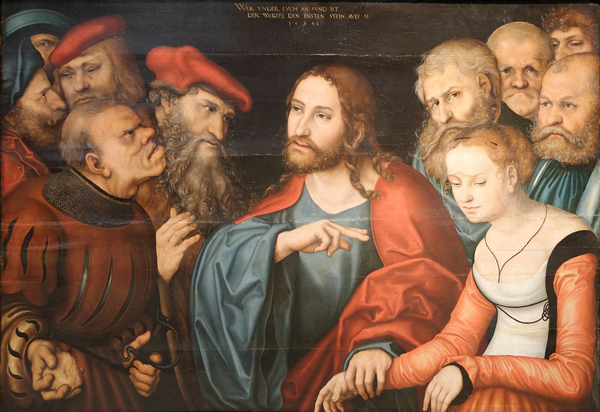
Telepathy (from Ancient Greek τῆλε (têle) ‘distant’ and πάθος/-πάθεια (páthos/-pátheia) ‘feeling’).
No man-made machine will ever match the greatest human gift. Given true humility – the under-appreciated reward of all suffering – we humans can and do communicate (spiritually, emotionally and intellectually) – with the mysterious source of all that exists – and all that has still to happen.
This is the evolutionary destiny of humankind – communion with our Source, and then – lovingly – with one another. It is a gift that comes with humility – which comes, in turn, from disaster – often the inevitable consequence of what we tend to call ‘success’.
The current triumphalist hype over computerised artificial intelligence – ‘AI’ – is certain to prove hollow. While often helpful, AI will also mislead and deceive, especially by flattery – and far too much is expected of it (especially in the role of ‘friend’). How could any mere human artifact be the end of human history? AI is dwarfed in importance by a gift that will come to our aid in the deepest danger – to clarify our minds and take us through the most harrowing historical test – now ongoing because of techno-grandiosity.
The Imposters – Triumph and Disaster
Historical and personal triumph is not what it seems but the threshold of disaster. This is confirmed by scripture as well as history.
To take some historical examples: the triumph of the USA following two World Wars 1914-45 and then the Cold War with the USSR by 1989. Overreach in Vietnam 1955-75 and then in the Middle East led to the disasters of 9/11 in 2001 and then the ignominy of the Trump presidencies 2016-20 and 2024-2028 – ending the American century that had begun in 1917 with US entry into World War I. The apparent victory of US liberal democracy, touted by one commentator as ‘the end of history’ in 1990, has been revealed as fleeting by a home grown populist autocrat driven by contempt for the power-limiting principles of those who designed the US constitution. But populism too is set for disaster. Was it truly the destiny of the USA to become a mirror image of China and Russia, misled by the myth of the ‘great leader’?
Biblical examples of hubris ending in disaster include:
The Downfall of the Tower of Babel, built to reach to Heaven (Genesis 11:1-9)
The Downfall of Saul – first King of Israel – in paranoid hatred of David, after early victories (1 Samuel 9-31)
The Downfall of Samson after early invincibility(Judges 13-16)
The Downfall of Belshazzar king of Babylon, after triumph over Israel (Daniel 5).
As for History itself, was it inevitable that US triumph in the Cold War in 1989 – the highest point of ‘the American Century’ that began with US entry into World War I in 1917 – would be followed by the humiliation of ‘9/11’ ? Earlier historical examples include the assassination of Julius Caesar in 44 B.C. – and the defeats of Napoleon I and Adolf Hitlers after their invasions of Russia in 1812 and 1941. Triumphalist heroes always go too far and unite their enemies – so supreme victory is always paradoxical.
The development of nuclear weapons beginning during World War II 1939-45 was another obvious example of technological development far outstripping moral development. Why are we so much more skilled at making war than making a lasting worldwide peace?
As for the reign of Pope John Paul II – lauded for his role in the collapse of the USSR – was it inevitable that his ignoring of early warnings of the scale of clerical child sex abuse would tarnish his record once this became a global issue?
‘Power tends to corrupt,’ insisted the Catholic historian Lord Acton in 1887 ‘and absolute power corrupts absolutely.’ He was referring specifically to popes and kings who had abused power.
Jesus of Nazareth was aware of this pattern from the beginning – the reason he resisted the temptation of not only political but institutional religious empowerment. He also knew from the scriptural record that disaster is often the necessary training for spiritual growth.
Blessed are the Poor in Spirit
“… sorrow, if welcomed with sincerity, becomes a place for conversion.”
Pope Leo XIV said this on August 13th, 2025 – at a general audience. Commenting on the scriptural account of Jesus’ poignant last meal with the apostles he was highlighting just one of many passages in scripture that speak of disaster as the necessary threshold of better beginnings.
Other examples include:
The throwing overboard of Jonah the prophet – by the crew of the ship on which he had attempted to flee from the mission given him by God – to warn the Ninevites of impending catastrophe. Rescued from this disaster he went on to fulfil this commission and become one of the many renowned prophets of Israel. (Jonah)
The selling of Joseph, son of Jacob, into slavery in Egypt by his jealous brothers – where Joseph won the favour of the Pharaoh and then became the saviour of his people, the Israelites, from famine. (Gen 37)
The flight of the young Moses from Egypt into the wilderness – to escape the consequences of a crime he had committed in anger. It was there, in desolation, that Moses received the call to return to Egypt – as liberator of his people. (Exodus 2 &3)
The death of King David – seen as disaster by his son and heir Solomon, who thought himself unready to follow his father. The prayer then said by Solomon (1 Kings 3:5-14) led to the telepathic wisdom that made him renowned throughout the world of his time. That prayer is ready for repetition by anyone still today.
The blinding of Paul of Tarsus on his way to Damascus to persecute the followers of Jesus. Convinced he had been waylaid by Jesus himself, now risen from death, Paul became an apostle to the non-Jewish world, setting a Jewish reform movement on an entirely new historical tack. (acts 9)
And Paul also used the gift that Jesus possessed to the highest degree – the gift of knowing what to say. This included ‘death has no dominion’ (Romans 6:9) – the truest summary of the meaning of the Crucifixion and Resurrection of Jesus.
The Crisis of Technological Hubris
Exaggeration of the potential of technology will inevitably precipitate a crisis – because it postpones the necessary task of repentance – the radical rethinking that is needed to bring realisation of our greatest human need – the need to belong to something greater than ourselves. Techno hubris leads instead towards the aggrandisement of a minority – the technocrats – and the inequality and injustice that follow cannot be resolved by personality cults. The corruption of governance has always called forth the gift of prophecy – of speaking the truth fearlessly to power.
Do Not Worry About How to Speak
In all four Gospels Jesus of Nazareth – the greatest of all prophets – insists that the source of all wisdom and insight lies outside of us – but can nevertheless inspire – breathe in to – us at times of the greatest danger.
“But when you are handed over, do not worry about how to speak or what to say; what you are to say will be given to you when the time comes.” (Matt 10:19)
“And when you are taken to be handed over, do not worry beforehand about what to say; no, say whatever is given to you when the time comes, because it is not you who will be speaking; it is the Holy Spirit.” (Mark 13:11)
“When they take you before synagogues and magistrates and authorities, do not worry about how to defend yourselves or what to say, because when the time comes, the Holy Spirit will teach you what you should say.’”(Luke 12:11,12)
“Make up your minds not to prepare your defence, because I myself shall give you an eloquence and a wisdom that none of your opponents will be able to resist or contradict.” (Luke 21:14-15)
Jesus made clear that he too relied upon this source:
“For I did not speak on my own, but the Father who sent me commanded me what to say and how to say it.” (John 12:49,50)
For a breathtaking example of the use of this gift by Jesus, read John 8:1-11.
Attunement?
How can it happen that in a crisis we can know what to do – and can speak then as God would want us to?
First, we must already know and freely obey the Great commandments of love – of God above all and then of our neighbours – all other humans.
No hatred of any others – even of those who may hate us – can be given any room in what we feel.
This is the ‘tuning’ – the attunement – we must seek if we truly wish to serve the truth – and prayer – the honest addressing of our most serious concerns to God, as a persistent habit – is indispensable.
Note especially that ‘telepathy’ strictly means not ‘thought transference’ but a communication of feeling – our deepest emotions – over distance. To be spoken the truth must first be felt, lovingly. There is far too much evidence of the ability of honest people to speak wisely – and with inexplicable courage and insight – to those who misuse power – for this to be dismissed as mere accident. Solomon’s request for a heart that is wise tells us where true wisdom comes from – not from our analytical brain but from our deepest emotional centre.
Experience of suffering – of powerlessness, grief and pain – is also vital – the necessary loss of the illusion of being somehow in control – for all experience of power is truly deceptive and deeply dangerous. Only if our experience from the beginning has been one of powerlessness can we avoid the need to be stripped of power.
To suffer is essentially to experience humiliation – to realise that we are utterly powerless to save ourselves – and humiliation is almost always the necessary path to humility, the acceptance of our powerlessness as we now are.
A sudden loss of all power is the experience of desolation – but conversion is the experience then of rescue – and the realisation in that moment, and forever afterwards – that we are held close by the One who made us.
Do not believe that there is a technological fix to the historical crisis now upon us – a consequence of the grandiosity that technological progress afflicts us with. Trust instead in the Trinity, and in your own mind and heart – and pray.
In this confidence you will then be given wisdom by the one who made you – and you will know what to do and what to say.
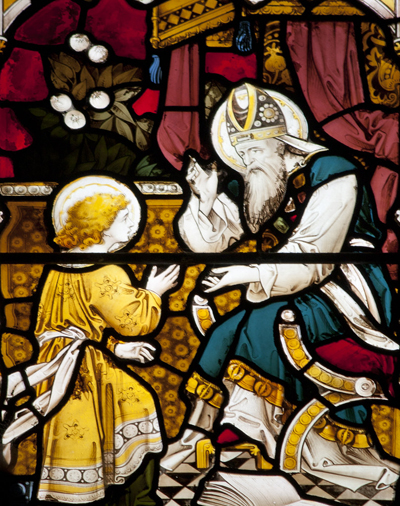
‘Here I am,’ said the young Samuel, waking up in the dark to a voice that only he could hear (1 Samuel 3:1). Are we not all being called awake in the night these times?
Views: 12