Category Archives: Synodality

No Historical Transparency in the Church?

While declaring transparency a requirement for a synodal church, the working document for the final session of the 2023-24 Vatican Synod on Synodality gives no promise of transparency around the historical origins of the standard procedure of concealing from Catholic parents the reality of clerical sexual abuse of children in the 20th century – a policy which spiritually traumatised countless Catholic children. How can the church become ‘missionary’ with such a background?

In Genesis we are told that for many years Jacob, son of Isaac and grandson of Abraham, did not know that his own most favoured son, Joseph, had not been killed by a wild animal but sold into slavery in Egypt by his other sons, out of jealousy. (Genesis 37-50

In the Book of Kings we learn that Naboth of Jezreel did not know that when he refused the offer of an exchange of land with King Ahab of Israel, Ahab’s wife, Jezebel, would scheme to dispossess and kill him.  (1 Kings 21)

Elsewhere we read that Esther, adoptive daughter of Mordecai and wife of Persian King Ahasuerus, was unaware initially that the powerful courtier Haman was plotting the extermination of her people, the Jews – because of Mordecai’s refusal to show due servility to Haman. (Esther)

Secure in her own garden, Susanna in Babylon was unaware that her beauty had enticed two elders among the Jews there to make a pact to threaten her with stoning to death for adultery if she did not give way to their lust. (Susanna and the Elders: Book of Daniel)

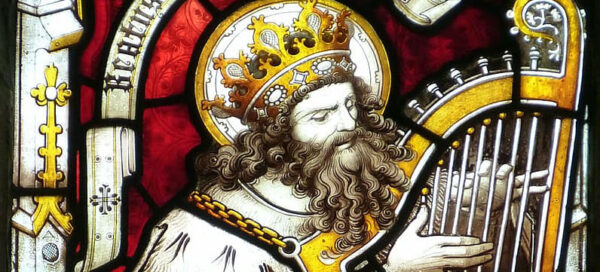
Uriah the Hittite did not know why the men beside him suddenly abandoned him in the thick of his final battle. He was oblivious to betrayal by his commander-in-chief, King David of Israel – who had seduced and impregnated his wife Bathsheba and then given orders that would doom him, despite his own loyalty to the cause of David’s kingdom. (2 Samuel)

Those women who gave birth to sons in Bethlehem around the time of Jesus’s birth had no reason to suspect that King Herod would plot their murder soon after hearing of the latter event. (Matt 2:16-18)

A Biblical Focus on Conspiratorial Injustice

Scripture scholars may doubt that all of these tales are historical, but the pattern of literary focus is clear. The authors had a common interest in narratives of high-level scheming, injustice, concealment and victimisation.  The reason for the concealment may often be implicit but always these plotters can be understood as having a common interest in preserving their reputations in the gaze of others.

That is, they all had a deducible interest in ‘saving face’, to use a phrase more often associated with Oriental culture.  

And this heuristic may also be applied to the Gospel accounts of the parts played by Caiaphas, Judas, another Herod and Pilate in the arrest, trials, crucifixion and death of Jesus of Nazareth.

The Innocence of the Victims

As the anthropologist René Girard has observed there is another common aspect of these narratives.  Their victims, or intended victims, were essentially innocent. Taken as sacred texts they all reveal the God of Israel, the claimed source of all scriptural inspiration, to be on the side of the intended victim or victims.  

Preservation of reputation on the part of plotters is far from being a dated and antiquated fixation – as proven by the outrageous murder of the journalist Jamal Khashoggi in Istanbul in 2018, by agents of the Saudi government.  That this is a western fixation also was most clearly revealed by the attempt of the Nixon administration to conceal the origins of the burglary of the Democratic Party headquarters in the Watergate Office Building in Washington DC in 1972.  High level financial ‘scams’ such as the Enron affair of 2001 and the Madoff ‘ponzi’ scandal of 2008 are apparently inevitable in Western capitalism. Jealousies, plots and betrayals are at the core of western fictional drama, up to and including the current TV series Succession. The tension of these dramas hangs always upon what is known and intended by ambitious or lustful characters and yet concealed, agonisingly, from others who will suffer the consequences.

Unwitting Victims of Reputational Fear

Until 1994 in Ireland Catholic parents generally did not know that the ordained status of men to whom they often entrusted their children did not always make those men incapable of severely harming those children, sexually, psychologically and spiritually.  By now those families who suffered this fate probably know that this phenomenon had been known to church authorities from the end of the first century CE (as recorded in The Didache). 

On December 9th 2009, following the publication of the Murphy report, the Irish Bishops Conference felt compelled to declare that:      

“We are deeply shocked by the scale and depravity of abuse as described in the Report.  We are shamed by the extent to which child sexual abuse was covered up in the Archdiocese of Dublin and recognise that this indicates a culture that was widespread in the Church.  The avoidance of scandal, the preservation of the reputations of individuals and of the Church, took precedence over the safety and welfare of children.  This should never have happened and must never be allowed to happen again.  We humbly ask for forgiveness.”1Statement following the winter meeting of the Irish Bishops Conference, 9th December 2009

Since then the international scope of this ‘cover up’ has become more apparent, as has that motivation to ‘preserve the reputation of individuals and of the church’ – made even more poignant by the claim of Fr Gerhard Gruber in 2010 that as vicar general in the archdiocese of Munich he had been pressurised to take the blame for mistakes made decades earlier in the handling of a case of abuse – when Pope Benedict, then Joseph Ratzinger, had been archbishop of that diocese.2‘Law firm to publish report on handling of abuse in Munich Archdiocese’, CRUX, Catholic News Service, Jan 4, 2022

An Unreasonable Comparison?

Is it unreasonable to compare this ‘cover up’ by churchmen with the plots and plottings of scriptural archetypes such as David, Ahab, Jezebel, Haman, Caiaphas and the Herods? Were those who practised concealment of clerical sex abuse of children ever truly aware of the scale of suffering they were visiting upon the innocent? Did they ever intend that suffering? May they not even have had worthy motives and been oblivious of serious injustice or harm?

All of these questions are plausible – and yet some may be asked also of some of the scriptural plotters, if mitigation is our intent.  For example, given King David’s symbolic importance to Israel, might he not have been justified in sacrificing one man, Uriah, to avoid demoralisation of the nation in time of war? And mightn’t Caiaphas, Herod and Pilate truly have had similar thoughts in the case of Jesus the Galilean troublemaker?

Why So Little Learned in Two Millennia?

Was a span of almost two millennia not truly sufficient to educate churchmen in the consequences to victims of childhood or adolescent sexual abuse? When it came to ending the cover up, did the church truly need to depend upon secular lawyers, police, courts, media? When it came to their ‘learning curve’ on the impact of sexual abuse on children should churchmen truly have needed the advice of secular psychology and psychiatry, when they had Jesus’s own stern warning to guide them? If so, why on earth condemn secularism and the Enlightenment?    

However plausible may be the attempts at mitigation of the cover up of clerical child abuse, it will always remain true that many children globally suffered totally unexpected and unimaginable horrors from these abuses. That much of this could have been prevented if the episcopal magisterium had shown corporate wisdom, courage and transparency ab initio, rather than corporate dedication to the protection of its own reputation, will also always be true – and the people of God truly deserve an historical accounting for this failure.

The Cover Up of the Past  

So far, instead, even after almost four decades of revelation, the cover up still extends backwards into the distant past. For example, no one knows why or when it was decided, with apparent unanimity by the magisterium, that Jesus’s own emphatic condemnation of the betrayal of childhood innocence (Matt 18:6) was irrelevant when considering whether ordained abusers of children could be retained in ministry after a first provable offence. Why was this most emphatic teaching of Jesus ignored, when the context of his only recommendation of celibacy (Matt 19:12) suggests that it was probably intended merely for those who could not contemplate life-long marital fidelity?  This obvious reluctance on the part of the current magisterium to consult and reveal the full Vatican and wider church record is a barrier to the ‘reckoning’ on clerical abuse called for by the Irish national synodal synthesis of August 2022.

Administrators’ Dilemmas 

Inevitably we must guess that it is still the situational dilemmas of administrators that delay a final reckoning. They need to reflect on that scriptural record, recalling where the Trinity’s sympathies always lie – as well as the prophecy of Simeon that the life of the child Jesus would reveal the hidden thoughts of many.  When Christian historians of the future tell this story, will they not also be stressing the innocence of the victims and the reputational fears of the powerful ordained?

Apart from this need to ‘clear the air’ on the handling of clerical abuse there is another reason for urgent closure. The teaching authority of Catholic bishops everywhere – especially in regard to sexuality – has been rendered null for many by this disaster. Irish bishops have still not revealed the reason for their failure to sponsor and publish reliable research on the widespread failure of Irish Catholic schools to develop a practised liturgical faith among their alumni in recent decades3See Faith Formation and Fear of Shame, The Furrow, 2017. This too is an unnecessary mystery suggestive of fear of self-embarrassment via the likely results of any such research.

Lack of Clarity on Sin

The clarity of the church’s teaching on sin is another serious issue. No one who pays any attention can be unaware that serious differences exist between the understanding of sin as prioritised by Pope Francis or, for example, Cardinal Robert McElroy – and sin as seen by the pope’s highest-level opponents, for whom the ‘no parvity’ principle in regard to all sexual rule-breaking is apparently as true and unshakeable as the Creed.

“… the sins of the flesh are not the most serious. The gravest sins are those that are more angelic: pride, hatred. These are graver.”4‘Full text: Pope Francis’ in-flight press conference from Greece’, Catholic News Agency, Dec 6th 2021 So insisted Pope Francis in December 2021, when asked about the admission by a French archbishop of an affair with an adult woman. If the ‘angelic’ sin of pride is indeed graver than lust, what about ‘the preservation of the reputations of individuals and of the Church’ identified by Irish bishops as a cause of the cover-up of sexual abuse? Wasn’t it David’s pride that prevented him from owning up to his own affair with Bathsheba – and then led to the far greater sin of murder-by-proxy?

The Catechism is seriously lacking an extended and culturally relevant treatment of both pride and covetousness – even while the problem of clericalism has been identified by Pope Francis as that desire for superiority, attention and honour55 Of the many times Pope Francis has warned against clericalism’, Kathleen N. Hattrup, Aleteia, 23rd August 2018 that the Catechism does identify as a feature of pride6Catechism of the Catholic Church, Glossary, ‘Pride. Defining covetousness as ‘modelling your desires on what your neighbour has’ would also allow the magisterium to see and reject the desire for social superiority that fuels all social ambition, including the rampant desire for celebrity. Secularism sorely needs an explanation of inequality – and pride and covetousness are ready to hand.

Sin of Pride Embedded in Clericalism

Or at least they will be when the magisterium has clearly seen these sins as fundamental to the cover up of clerical sexual abuse, and confessed them frankly as embedded in clericalism and ecclesiastical ambition. Pope Francis’s courage in opening up this debate needs the support of all bishops in the pursuit of a ‘reckoning’ – a telling of the complete truth of the hierarchical church’s own sins.  

When it happens this telling will involve a full exposure of the historical record, and the sooner the better. Scripture lauds the anointed King David while telling us the worst that he did. Jesus’s own mitigation of the offences of his persecutors – ‘they know not what they do’ – can be applied also to the cover up of clerical abuse but we need, urgently, the full story – whatever may still impend – if the church is to overcome this disaster in the time of any of the generations now living.

It took decades for Jacob to learn that his most favoured son was still alive, but at least he lived to see Joseph again, now greatly honoured, in Egypt. In knowing that Catholic churchmen at the highest level can visit the most appalling suffering upon innocent children, out of concern for the reputation of ‘the church’ – and can collaborate to hide this problem until exposed – don’t we Catholic people already know the worst?

As stated by the July 2024 Instrumentum Laboris for the final session of the Vatican Synod of Bishops on Synodality in October 2024:

“A synodal Church requires both a culture and practice of transparency and accountability, which are essential to fostering the mutual trust necessary for walking together and exercising co-responsibility for the sake of the common mission.”7How to Be a Missionary Church, Instrumentum Laboris for Second Session of Universal Synod of Synodality, Oct 2024, P.32, Article 73

Despite this statement of principle there is no sign whatever in the document of a realisation that continuing secrecy about the recent past is an insuperable barrier to trust – and so also to communion, participation and mission. How are we to take the call to transparency seriously if secrecy is still to be maintained around the greatest scandal the church has ever suffered?

Never in the long history of human shepherding have so many sheep been lost by so many shepherds – but apparently we are never to know why.

Notes

  1. Statement following the winter meeting of the Irish Bishops Conference, 9th December 2009
  2. ‘Law firm to publish report on handling of abuse in Munich Archdiocese’, CRUX, Catholic News Service, Jan 4, 2022
  3. See ‘Faith Formation and Fear of Shame’, O’Conaill, The Furrow, 2017
  4. ‘Full text: Pope Francis’ in-flight press conference from Greece’, Catholic News Agency, Dec 6th 2021
  5. ‘5 Of the many times Pope Francis has warned against clericalism’, Kathleen N. Hattrup, Aleteia, 23rd August 2018
  6. CCC, Glossary, ‘Pride
  7. How to Be a Missionary Church, Instrumentum Laboris for Second Session of Universal Synod of Synodality, Oct 2024, P.32, Article 73

(Author’s note: An earlier version of this article appeared in the Oct 2023 edition of The Furrow, under the title A ‘Reckoning’ on Clerical Abuse? Challenge and Opportunity.)

Views: 3298

2024: Irish Catholic Vocations Office Mired in Clericalism

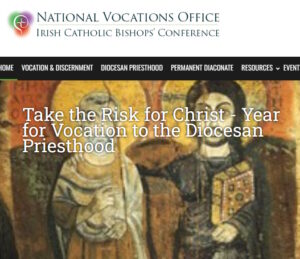
 Front page of the Irish National Vocations Office website in January 2024

“Is God Calling You to be a Diocesan Priest? Come and See. Take the Risk for Christ.” This is what faces you when you click https://vocations.ie/ the website of Ireland’s Catholic “National Vocations Office”.

Asked by Ardal O’Hanlon on his RTE documentary what risk was involved in opting for the celibate priestly vocation today, the National Vocations Coordinator, Fr Willie Purcell, responded:

“Anyone who is presenting himself for priesthood nowadays is really being counter-cultural. It really is a radical decision. The risk really is giving yourself completely to Christ that others might come to know him through you.  There really is a lot of humility involved in it, of self-sacrifice involved in it, but most important of all a vocation is a selfless decision, to give yourself to Christ and then to give yourself to others.”

Yet again we are being asked here to ignore what the Gospel clearly tells us about Jesus, viz.:

  • That he was never a member of the priestly religious institution of his own time and place;
  • That his definitive role in ‘salvation’ was not sacramental or liturgical (i.e. symbolic) but the direct prophetic challenging of a religious system he saw as both exploitative and hypocritical, to the danger of his own life;
  • That it was therefore his integrity, not his celibacy, that constitutes the central sacrifice that he did indeed ask us to repeat in memory of him;
  • That the definitive Christian calling to ‘follow’ him was therefore NOT to males only to join an exclusively male religious institution but to the same self-giving and integrity in whatever social role we baptised Catholic Christians find ourselves – whatever our gender, age or occupation.

Why does the National Vocations Office see only the risk to clergy?

Why is it not obvious to the Irish National Vocations Office that any social role, in any society, can and does involve these challenges to integrity – and that risk can attach to any of these?

It isn’t only the lives and trials of outstanding Irish individuals such as Veronica Guerin, Maurice McCabe and Martin Ridge that demonstrate this. Public service, especially for women, has become notably more risky and challenging for anyone who approaches it with integrity in the age of the Internet. With Pope Francis now calling all of us, even teenagers, to ‘mission’ today – and with Irish Garda, nurses, firefighters and paramedics at risk on every callout in certain locales in Ireland  – why was this not obvious to whoever dreamt up the slogan ‘Take the risk for Christ’ – implying that the risk of Christian witness attaches solely to the male celibate sacramental calling?

Lessons of the Pandemic

Did not the Pandemic teach us that in an interdependent society the lives of all of us can depend upon those who risk turning up even to man the check-out in the local supermarket or the counter in a dispensary?

Isn’t even any Irish teenager who stands in school against sexual harassment or homophobic bullying – or online trolling of a friend – at risk, and is not this the risk that attaches to the common priesthood of the people of God, the risk that comes to all who affirm their Baptism?

Why does Fr Purcell imply that only the diocesan priest has the responsibility to bring the message of Christ to others, when the key message of synodality is that this responsibility comes to all of us with Baptism?

The Priests who spoke out

As for the specific risks that do indeed attach to the sacramental priesthood, how would Fr Purcell account for what happened to those Irish priests who did prophetically challenge the injustices of church policies in relation to women, the LGBT community and the mishandling by bishops of the issue of clerical sexual abuse of children in Ireland, back in 2012?

What a shame that Ardal O’Hanlon did not think to ask if that was indeed the ‘risk’ that the National Vocations Office has in mind!

Child Safeguarding and Risk

And if he had asked that question, would Fr Purcell have recalled  that we have never yet had an open conversation on the role and obligation of private conscience when faced with an abuse of authority in the church, as could happen, for example, to any of the child safeguarding personnel we now depend upon?

With synodality far from firmly embedded in our Catholic culture, and canon law still a mess, the risks for every servant of the church that are still posed by the church itself are far from merely notional or historic. Does Ireland’s National Vocations Office truly serve the church by apparently forgetting all of that?

Why in 2024 can we not instead have a properly balanced understanding  of ‘vocation’ that does not associate counter-cultural Christian self-sacrifice and ‘humility’ solely with the male celibate sacramental priestly role or imply that for all lay people the risk of Christian witness must be secondary?

Is it not to this clericalist talking-up of the sacramental role alone – and the consequent forgetting of the priestly and prophetic calling of all of us – that we must ascribe the incomprehension of so many young people about the Christian call to themselves?

Baptism the Primary Sacrament of the Priestly People of God

Finally, given the paramount importance of communicating the meaning of our common priesthood, why is the restoration of the primacy of Baptism still lagging totally in Ireland? Is that no concern of the National Vocations Office, or of the Irish Bishops Conference?

In its singular concern for the survival of the sacramental Catholic priesthood in Ireland the Irish National Vocations Office has presented us yet again with an understanding of the Christian vocation that is stridently and essentially clericalist.  This can only undermine the central message of synodality and delay the emergence of the co-responsible church we so badly need.

17th Jan 2024

Views: 2049

Comeuppance or Confession – A ‘Reckoning’ on Clerical Abuse?

Faced with apparently unending scandal – and dwindling credibility and authority in the societies it has scandalised – should Catholic church leadership look to scripture, especially the story of King David of Israel, for insight into a scenario for resolution?

In 2023, with the global tide of clerical sex abuse scandals still surging in places as far apart as Poland, Ireland and the US state of Illinois, Catholic church leadership seems as bereft as ever of a strategy for ‘getting ahead’ of such revelations.

In December 2022 Irish bishops agreed with the conclusion of Ireland’s national synodal synthesis of August 2022 – that a ‘reckoning’ on the disaster has still to be achieved 1Statement following the winter meeting of the Irish Bishops Conference, 7th December 2022 – but it is far from clear that the Universal Synod on Synodality, to culminate in Rome in the autumn of 2024, will rise to this challenge.

What ‘shape’ could such a reckoning take in any case? How, in particular, would the victims of clerical sexual abuse and their closest kin, picture that?

Comeuppances

Popular secular culture provides one obvious model for closure on high-level concealment of malfeasance. In the classic movie ‘All the President’s Men’ the final sequence is a montage of press headlines, culminating in President Nixon’s resignation announcement – on foot of the Washington Post’s remorseless investigation of the origins of the Watergate burglary of 1972. This was Nixon’s ‘comeuppance’ – the deserved consequence of his paranoid detestation of a critical media.

Similarly a fictional streaming TV epic, the HBO series ‘Succession’, ends with the rivalrous adult children of another ‘mogul’ visiting a variety of betrayals and indignities upon one another – including the takeover by an interloper of the media empire they had all plotted to inherit.

This ‘comeuppance’ scenario satisfies the natural human desire to see what TV readily provides in the form of ‘perp walks’ – the bitter experience of downfall by the highest conspirators, with merited suffering etched clearly on faces. Who can forget Richard Nixon’s grotesque attempts at facial denial of the defeat he had fought tooth-and-nail to prevent, or the fictional Kendall Roy’s final frozen stare into his own endless horizon of failure?

No such comeuppance is possible for the long-dead originators of the Catholic policy of secrecy on clerical sexual abuse.  There is as yet no official history of this cover-up but the best short unofficial account2A Very Short History of Clergy Sexual Abuse in the Catholic Church, Thomas Doyle tells us that the decisive steps that affected living victims had already been taken by 1962. Already in 2023 the first decisive media revelations of the phenomenon – those relating to the abuser Gilbert Gauthe in Louisiana ­– are almost four decades old, and very few if any bishops have ever been criminally sanctioned by secular courts anywhere for a cover-up since then.  The secularising principles of distance between church and state, and freedom of the press, have exposed the dysfunctions of power as exercised by the Catholic hierarchy but new state laws cannot now be made against concealment of clerical child abuse in the past.

Would it ever be sufficient in any case to see only some individuals suffer for what is in essence a colossal global institutional failure, with ramifications that must utterly change the nature of our church relationships if they do not shatter the church altogether? Would it not be more satisfying – and redemptive – for the leaders of the affected institution to uncover and confess an utterly mistaken and sinful sequence of decisions that sacrificed the innocence and future of children to preserve the celibate reputation of the clerical institution itself – a sequence that can nowhere find justification in the texts that the church claims as foundational?

Cover Up and Betrayal in the Bible

Are not those texts – the books of the Old and New Testament, the Bible – replete instead with stories of betrayal, victimisation of the innocent and then concealment by those exercising power – including spiritual power? Why has it not yet happened that these scriptural patterns of misuse of power and of divine intolerance of injustice have been officially recognised in the Catholic clerical church’s mishandling of clerical sexual abuse of children and the scandalous revelations that still remorselessly follow?

Take, for example, the two Jewish elders in Babylon who tried to intimidate Susanna into yielding to their lust, well aware that just two elder testimonies to any woman’s adultery would usually be sufficient for a sentence of death by stoning. Those two were thwarted only by the inspired young Daniel’s stratagem for discerning their conspiracy. (Susanna and the Elders: Book of Daniel).

Similarly Jezebel’s scheme for dispossessing Naboth of his vineyard, and then murdering him, was empowered by the divinely anointed status of Jezebel’s husband, the Israelite King Ahab -condemned later by the prophet Elijah for his connivance. (1 Kings 21)

The exposure of the crime of the brothers of Joseph, the most favoured son of Jacob, grandson of the founding patriarch Abraham, took much longer but was also implicitly a result of divine providence – the raising of Joseph to supreme favour in Egypt, where he had been taken when sold into slavery by those siblings. (Genesis 37-50)

Leaving aside the question of the historicity of these and other such narratives, the central focus of their authors follows always the same pattern: power is misused to satisfy the desires of power-wielders at the expense of victims who are innocent – and the God of Israel is revealed as wholly intolerant of this injustice.

Even if it can be argued that there was ignorance on the part of offending bishops of the likely effects of clerical abuse upon children, this raises its own questions as to the safety and wisdom of the church’s governing system – given especially Jesus’s most vehement warning against any adult misleading of a child (Matt 18: 6). Do we not need to know why the clerical church, with an experience of pederasty dating from the earliest centuries3See The Didache, had to look in the end to secular psychiatry for the truth of the impact of such abuse on the young?

Status Anxiety the Root of Secrecy

Another connection implicit in all of these biblical stories is that between the status anxiety of the conspirators and the secrecy they try to maintain over their own motivations and actions. By ‘status anxiety’ I mean fear of shame, of social condemnation and rejection, in consequence of revelation of the selfish exercise of power. These biblical stories surely reveal a pattern that should have warned against clerical secrecy over clerical abuse – especially because of the repeating pattern of divine intervention on the side of victims.

That this identical pattern has been replicated in the case of secrecy in Ireland must now be obvious. Not until the first criminal prosecutions for clerical sex abuse in 1994 did Irish bishops begin to act decisively in the cause of child safeguarding. Then it took the Murphy report of 2009 to precipitate the Irish bishops’ declaration that there had indeed been a widespread culture of cover-up, motivated by a desire to protect the reputations of individuals as well as that of the church4Statement following the winter meeting of the Irish Bishops Conference, 9th December 2009.

However, this same declaration, seemingly regretted by some Irish bishops at the time, now points to a future church document that builds upon scriptural examples of ‘reckoning’ – to admit that the great conspiratorial sins of Old Testament archetypes have had a near equivalent, with countless child victims, in our own time. That document will surely reference the greatest of all failures by an anointed leader of Israel – King David – and draw inspiration from his example of contrition.

King David’s Confession

Who cannot see that the most obvious reason for David’s betrayal of the Hittite elite soldier Uriah was also David’s status anxiety, his desire to conceal his self-indulgent seduction and impregnation of Uriah’s wife Bathsheba – while Uriah was himself away from home, fighting Israel’s enemies? At length the book of Samuel has previously extolled David’s youthful climb to celebrity, with the women of Israel chanting of his military exploits and his superiority to Israel’s first anointed king, Saul. The fall from grace that David faced in the matter of Bathsheba’s pregnancy was in direct proportion to this unparalleled status – and far too much for him to bear. His despicable betrayal and murder-by-proxy of Uriah then followed. (2 Samuel)

And yet, according to the same narrative, Israel itself was preserved in the Old Testament telling, by the courage of the prophet Nathan and by David’s reciprocal compunction and contrition. This too – the eventual victory of the truth, and not the celebration of any individual or caste – is the true glory of ancient Israel, and of our church’s foundational texts.

It is surely inevitable that the Catholic clerical leadership will someday admit that their institution sinned against children, their families and the Trinity by attempting to keep secret the hard and vitally important fact that a small but significant proportion of ordained Catholic priests could mislead and violate children.  They could also recognise that in making use of the inspired secular principle of a division of power to reveal this mistake the Trinity are not only vindicating all child victims but revealing the future of Catholic church governance.

In the meantime are we not all living in the Limbo of our church leadership’s inability to grasp decisively the nettle of compunction and contrition? We are surely in these days as ancient Israel was in the time between King David’s crimes and his heartfelt and full confession. This time of high-level hesitation and bitter revelation cannot end soon enough for a myriad of living victims, and for all of us.

Notes

  1. Statement following the winter meeting of the Irish Bishops Conference, 7th December 2022
  2. A Very Short History of Clergy Sexual Abuse in the Catholic Church, Thomas Doyle
  3. See The Didache
  4. Statement following the winter meeting of the Irish Bishops Conference, 9th December 2009

Sean O’Conaill
June 2023


This article appeared first in La Croix International on June 7th, 2023.

Views: 1690