Category Archives: Maladies

What underlies René Girard’s ‘Mimetic Desire’

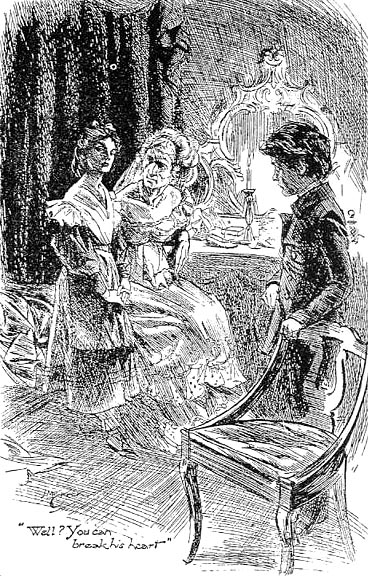
In Dickens’ Great Expectations the lowly Pip is haughtily inspected by Estella, ward of the grand and very strange Miss Havisham

What is it exactly that underlies our tendency to want what others have?

This question was posed by myself to Duncan Morrow in a conference centred on the thought of René Girard in Corrymeela, Northern Ireland, in November 2017.

Necessarily confined by his need to deal also with other questions in a short timeframe in this seminar situation, Duncan’s response was concise in my memory of it.  Arguing against the romantic Enlightenment conception of the individual person as a completely autonomous actor, he emphasised the necessarily relational development of the ‘self’.  Referencing the French philosopher Emmanuel Levinas, Duncan proposed (I believe) that the desiring ‘self’ is always participating and developing within a network of relationships in both time and space.  He drew a simple lattice of intersecting lines to illustrate this.  He then circled some of the nodes of this lattice as points of encounter with others that will necessarily impact upon us, and therefore upon what we will desire. (Figure 1)

Fig. 1 – ‘The Social Network’

This was helpful to me, as I had already reached an understanding of mimetic desire as ‘socially mediated’. 

However, I was struck by what seemed the ‘coolness’ or ‘lack of drama’ in this brief account of social interaction.  I felt that I was being invited to believe that in these encounters there could be no question about the equality of dignity of the actors – that such events would always be as ‘comfortable’ as a conversation in Corrymeela.

Looking back I think this impression must have been partly a product of the two-dimensional illustration of that lattice.  I wanted to go on to explore another interior dimension, that element of ‘drama’ – of ‘felt inadequacy and inequality’ – that is present in so many of our social interactions.  I could not do that right then as other members of the group had other questions waiting.

And so I propose to explore it now, by introducing what I tend to call the universe of uncertainty, honour and shame in which we all emotionally dwell.  I will begin with a very short story of my own early mimetic desire.

Some years before my own arrival on this planet in 1943, as the son of a Dublin civil servant, my mother’s younger sister had taken the eye of a prominent Dublin obstetrician.  I grew up some miles away from a slightly younger cousin, the son of this doctor.  Occasionally I visited his home in a far more select Dublin neighbourhood. 

To this day my use of a particular brand of soap was determined by my finding it, on one of those days, in the far more luxurious bathroom of that house.  Its shape and colour and weight and scent lingered with me, at the age of about twelve I think, and gave birth to the desire that I was later able to satisfy.

Status Anxiety

‘We are afflicted with a congenital uncertainty as to our own value.’  So concluded the philosopher Alain de Botton in 2004M1Status Anxiety, Alain de Botton, Penguin, 2004, p. 15. I can think of no better short summary of my own considered view of our deepest human problem.  As this chronic uncertainty tends to put us in flight from shame and in search of honour (both socially ‘mediated’) it lends itself to a perception of society as necessarily and righteously ‘judgmental’ – as having both the power and authority to determine our ‘worthiness’.

In that household of my cousin I had an acute sensitivity to my own social inequality, my lack of what is called ‘status’.  I was not thinking in those terms at that time, but I was lacking in something important: this was painfully obvious to me.  That I might make up at least part of the deficit by using that particular commodity seemed logical enough. No dramatic reverse had ever happened to me in that house – merely a condescension that was usually kindly.  However, just that element of condescension, and my mother’s deferential yet slightly resentful behaviour towards my aunt and uncle, had been more than enough to make me want to ease the shame of my felt inferiority by that means.

A far more dramatic story— also to do with a visit to a grander house – is told in Dickens’s Great Expectations (1861). Raised in a smithy by a tyrannical sister and her submissive husband Joe Gargery, the young Pip – just beginning his apprenticeship in the smithy – is brought one day to the decaying but still impressive Satis House, to play with the ward of the very strange Miss Havisham.  This well-dressed young lady, the ‘very pretty’ Estella, disdains to play cards with Pip at Miss Havisham’s request – although she is of the same age.  She comments on his ‘coarse hands’ and ‘thick boots’.  Later she leaves him alone in a courtyard in the dismal Satis House, and Pip recalls:

I took the opportunity of being alone in the courtyard to look at my coarse hands and my common boots. My opinion of those accessories was not favourable. They had never troubled me before, but they troubled me now, as vulgar appendages. I determined to ask Joe why he had ever taught me to call those picture-cards Jacks, which ought to be called knaves. I wished Joe had been rather more genteelly brought up, and then I should have been so too.

When Estella returns to give him some food in that yard, without looking at him ‘as if I were a dog in disgrace’, Pip feels deep humiliation:

My sister’s bringing up had made me sensitive. In the little world in which children have their existence whosoever brings them up, there is nothing so finely perceived and so finely felt as injustice.2Great Expectations, Charles Dickens, Chapter 8

Discerning on many subsequent similar visits to Satis House that the increasingly beautiful Estella is deliberately being schooled by Miss Havisham to attract and reject many suitors, Pip comes to desire not only Estella but the gentrified status that could allow him to court her. The novel pivots on that desire.  Pip has become entrapped not only in the web spun by Miss Havisham but in the wider social web that had captured and unbalanced her. 

Earlier, in Little Dorrit (1855), Dickens had made even more plain his understanding of this social conditioning. Briefly, the elderly William Dorrit has been locked up in the Marshalsea prison for so long, for debt, that he has become – at least hopefully in his own eyes – a worthy object of veneration. He deals with the shame of his indebtedness by affecting the role of monarch of the prison. He affects also the belief that visitors to the prison will feel privileged to pay tribute in small gifts of money for his upkeep. He converses with these as though bestowing honour upon respectful envoys from foreign lands.

His daughter Amy – Little Dorrit – had been born in and has grown up in the Marshalsea – and is stunned when an investigation reveals that, to a vast fortune trapped in legal confusion in the world outside, her own father, William Dorrit, is the true heir.  Released from the Marshalsea in splendour, the family undertakes a European Grand Tour.

In Venice eventually, staying in a luxurious rented villa, Amy is troubled to observe that:

“A perfect fury for making acquaintances on whom to impress their riches and importance has seized the House of Dorrit… It appeared on the whole, to Little Dorrit herself, that this same society in which they now lived greatly resembled a superior sort of Marshalsea.”3Little Dorrit, Charles Dickens, Book II, Chapter VII

In just these two sentences Dickens reveals that William Dorrit’s real prison had not been the Marshalsea, or even London. He had carried it with him to Venice in his own head. It was the prison of his own fixed conviction that his dignity and value were absolutely at the mercy of the judgement of others, of society. His suddenly acquired wealth could not in itself convince him of his own dignity:  it needed to be observed, appreciated, recorded – at the summit of that Victorian social pyramid – for Dorrit himself to be convinced of his own value as a person.

It seems to me therefore that to illustrate the perceived judgemental authority of that social network, in time and space – the network that convinces us that honour is not a ‘given’, and that shame attaches to the nakedness of owning nothing  – we need to add something to that lattice in Figure 1.  That ‘something’ should convey this perception by our ‘little selves’ that ‘society’ regards us not with affection or even disinterest, but appraisingly and with imminent scorn. 

To try to convey this I did some searching among the images provided on the Internet for ‘scales of justice’ and ‘observing eye’ – and overlapped two of them, as follows:

Fig. 2 – The Appraising Social Eye


What if we now zoom in on one of those ‘nodes’ of encounter in the experiential lattice in Figure 1 – to note that in critical social situations we are subjectively ‘under judgement’ as illustrated in Fig.2?

It remains only to superimpose the second image upon the first to complete a rendering of the power of the social network to influence our mimeticism (Fig. 3).

Fig.3 – The Appraising Social Network

From early experience of parental presentation to relatives (to warble agonisingly in an unreliable soprano in my case!) to the teacher’s assessment of our intellect in the classroom, to that first job interview and, in later years, to the end-of-year honours’ list, are our lives not always a series of ‘trials’?  Always uncertain of the outcomes, is it not our fate to be poised always somewhere between the City of Shame and the City of Honour?  And do we not typically seek to acquire whatever will ward off the disaster of social contempt – unless we can sometime find a means of ‘relativising’ society itself?

Somewhere in my encounters with Girardian literature I am sure I came across a quote from René that explicitly acknowledged that role of the fear of shame – in not only determining the object and intensity of our desire, but in explaining our reluctance to acknowledge that imitation has played a part in that. To my annoyance I cannot now locate that passage.  I shall be indebted if anyone can help – and even more pleased with other references to this underlying dimension of honour and shame in choosing our models for us –  and in determining the intensity of our desires – in the development of mimetic theory.   

I strongly suspect that it is this same experiential dimension of judgement, honour and shame that for so long concealed the full meaning of the verb ‘to covet’ from Christian clergy – and that underlies much of the remaining resistance to mimetic theory in our own time.  That a major ‘sin’ could have become obscured to the view of Christian moral theologians for so many centuries is not something that those schooled entirely in that discipline would necessarily feel ‘honoured’ to acknowledge.

Sean O’Conaill, Feb. 2018

Notes:

1 Status Anxiety, Alain de Botton, Penguin, 2004, p. 15
2 Great Expectations, Charles Dickens, Chapter 8
3 Little Dorrit, Charles Dickens, Book II, Chapter VII

Views: 66

2018: A year of rescue from the belly of the whale?

So impossible is the Bible story of Jonah that we surely must take it as a sacred allegory, a storied metaphor for the many and varied disasters that can transform completely the lives of those who suffer them.  Any of us can get thrown overboard when we least expect it these days – and then find ourselves in an impossible darkness, a place of disorientation and apparent defeat.

So has it been in recent years for all who remember a totally different ‘Catholic Ireland’ – when the church’s future seemed secure, and no shipwreck was on anyone’s horizon. Now we find ourselves both underwater and in the dark, thrown off the deck of a secularising Ireland by those who have decided that we and our faith stand in the way of all ‘progress’.

As if to wave a final goodbye, Patsy McGarry of the Irish Times told us on Nov. 7th, 2017 that our schools had failed to provide Ireland’s commercial and banking elites with the moral backbone to resist the excesses of the ‘Celtic Tiger’.

“Would developers have been as reckless had church-run schools been effective? Would bankers have driven the economy over a cliff? Whatever happened that laudable ‘Protestant probity’ once associated with Irish banks?”  These and other questions underlie the growing defection of younger generations from church practice, according to McGarry.

The mention of ‘Protestant probity’ tells us that we are not the only ones to be thrown off the deck:  Christianity itself is to be challenged, and probably all religion –  charged with  moral bankruptcy.

This is, of course, grist to the mill of the Enlightenment’s claim that reason, shorn of Christian faith, can deliver Utopia – and that Catholic schools especially are a barrier to that.  That Ireland’s developers and bankers might in fact have been in thrall to the economic ideology of the Enlightenment (beginning with Adam Smith) rather than to the call of the Christian Gospel did not occur to Patsy McGarry.  ‘It’s all the fault of faith schools’ is the more saleable cry of the moment.

Yet before we all protest this obvious scapegoating of the churches we need to remember  why Jonah had found himself on board that ship to begin with.  Had he not been running away from  the risk of facing Nineveh with its imperfections?

To the same effect, was Catholic social teaching ever advanced with sufficient strength by our clergy and educationists in Ireland – in all schools and parishes – as part of a critique of the social blindness of our rising commercial and political elites?  Similarly,  was ‘worldliness’ ever unpacked as we lauded the effectiveness of our schools in producing ‘successful people’.  Can anyone remember a homily – or a clergy-led parish discussion – on the dangers of measuring ‘success’ in terms of social acclaim, or on the vanity of celebrity-seeking?  Who has heard a sermon on the silliness of supposing that an iPhone X, or even an iPhone XXX – or a Lamborghini – will make us instantly, more worthy?  Are Catholic teenagers even yet being told in school and church that the aim of becoming famous just for the sake of being well known is the very last word in futility?

Following Vatican II, did any parish community anywhere in Ireland experience regular opportunities for critical discussion of the huge changes that came to Ireland then – of the rising power of media to make us ‘lose the run of ourselves’, and of the moral dangers of excess that could come with easier times?

And must we not indeed wonder why Ireland’s political elites – mostly the products of our Catholic schools – are so complacent in the face of the homelessness of so many children, while so many adolescents wait endlessly for attention to their mental health issues, and so many urban families wonder if their incomes will cover their mortgage payments next year?

It could not be a better time to ask such questions, with Ireland set to receive a visit from the Pope in 2018.  In the whale’s belly still – in terms of morale – we have an opportunity this Advent to reflect not only on the problems of the family but on the necessary role of the family in teaching social solidarity, moderation and generosity of spirit.  The decades of denial of adult dialogue that underlies the serious weakness of the Irish Church can now be repaired, beginning in 2018 – if our bishops especially have had enough of the whale’s belly.  Who better than Francis to pull us out?

This is a time for reorientation, and the means for that lie to hand.  Cardinal Kevin Farrell (Prefect of the Vatican Dicastery for Laity, Family and Life) assures us that the pope will challenge us to a new era of mission – and not just to mission in Ireland. To begin to consider that is to address the question of what underlies the pursuit of social acclaim through personal aggrandisement – globally. What have we Catholics lost as a result of our demotion by media, other than our complacency and our illusions?  Do we really need to restore those?  Are we now not in the very best position to proclaim that God loves  us even so – and to ask the most searching questions of an Ireland once more in ‘economic recovery mode’?

For example, how wise is it to suppose that if we can accumulate a  million ‘Likes’ on social media, or two million Euro in business, or even a few movie Oscars or a houseful of sporting trophies – we have added anything of real importance to our central ‘being’?  Are all of the ‘games’ that the world now arranges for us not in fact a whirlwind of distraction from the reality that we were always, and will always be, ‘somebodies‘?

That the value of every human person is sacred from the beginning, and then unchangeable forever, is central to Christianity.
That the value of every human person is sacred from the beginning, and then unchangeable forever, is central to Christianity.  The whale’s belly is merely a ‘wake up’ call to the futility of trying to add value to ourselves – by ‘looking to others for glory’. No message is more needed by an Ireland in thrall to the illusion that we do not already possess the treasure that we seek.

Yes, folks, this is indeed an early plug for Christmas 2017!  Rescued as we soon again will be from the fear that we have been forgotten, we Catholics will be very well placed indeed to ask such questions, and to deliver that message.  We might even be ready to tell Pope Francis  next August exactly what he needs to hear.  Trained well by experience of ‘social trauma’, and woken up to the central ‘good news’ of the Gospel, we can and must become the ‘field hospital’ for the many other casualties of entirely bogus ‘failure’ in Ireland.

It will soon be time for all of us to wake up to rescue from the belly of the whale – to the realisation that we must not look to media – the new brokers of honour and shame – to pass the final verdict on the record of  our church in Ireland.  What matters is our own relationship with the living truth, the Lord who forgives and then restores the soul. There is no such thing as a ‘ruined life’ when the Lord dwells within and among us – so why not wake up fully right away to the challenge of using all of our gifts to restore the dignity of the poorest in our society?  Is this not what our missal texts are telling us these days?

Our Irish church is surely called just now – by the times we are still going through as well as by Pope Francis – to become yet another ‘sign of Jonah’ – proof of the power of the Holy Spirit to ‘make all things new’.

Views: 11

The Mass: a ‘Holy Sacrifice’?

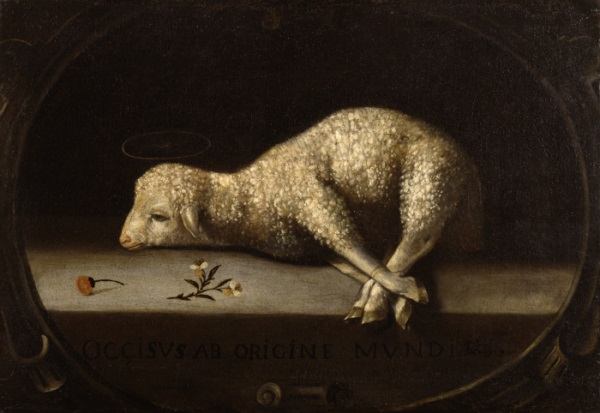
Josefa de Ayala, The Sacrificial Lamb (c. 1670-1684)

Must Catholics believe that God is violent? Taught that the Mass is a ‘Holy Sacrifice’ must we therefore believe that ‘the Father’ required a violent sacrifice to still his anger, and that this is the central message of the Eucharist?

Never having heard an Irish Catholic cleric squarely address such questions, and therefore inferring more than a little uncertainty, I (and others in Ireland) have followed with fascination the key ideas of the late American-French anthropologist René Girard and his collaborators. (These can be traced from the website of the Girardian Colloquium on Violence and Religion.)

René Girard 1923-2015

Girard argues that the historical origins of all religion lie in an attempt to minimise social violence by focussing it upon a single victim. He argues also that the Judeo-Christian scriptures point to a unique critique of this religious violence – and especially of the ancient practice of blood sacrifice. His work has therefore been exploited by some theologians to deny that the death of Jesus, or the Mass, can safely be understood as a sacrifice.

However, Girard himself famously changed his mind on this very issue. Influenced especially by the Austrian theologian, Raymund Schwager, Girard concluded in his mature work that the meaning of ‘sacrifice’ is itself undergoing a shift in the course of the Judeo-Christian texts. The ‘precious gift to God’ aspect of sacrifice had always accompanied the ‘killing’ aspect (for example in Abraham’s intention to sacrifice Isaac). This story shows how this ‘gift’ aspect gradually becomes predominant – in the end supplanting, in Jesus self-giving, the element of priestly killing. In offering himself, Jesus united the always previously separate roles of priest and victim – defining a sacrifice that resists all projection of the consequences of sin onto someone else. This leaves open an interpretation of ‘Christian’ sacrifice as directly oppositional to violence, and as ‘self-emptying’ or ‘self-giving’ – utterly uncompromised by any suffering inflicted upon a third party.

In the latest issue of the Girardian journal Contagion, Anthony R. Lusvardi S.J. argues that theologians who use Girardian anthropology to reject any concept of the Mass as ‘Holy Sacrifice’ are therefore mistaken. Lusvardi tracks this scholarly debate with detailed footnotes and makes the case for regarding the Mass as a divinely inspired act of worship that makes present “that central moment in human history when seemingly endless cycles of violence and falsity are brought to a halt by the limitless self-offering of God” (‘Girard and the “Sacrifice of the Mass”: Mimetic Theory and Eucharistic Theology’, Contagion Vol. 24, 2017 ).

For me this article strengthens a conclusion that it is unnecessary to oppose an understanding of the Mass as ‘holy sacrifice’ on the one hand, to its character as celebratory ‘communal meal’ on the other. If Christian sacrifice is self-giving, the ‘communal meal’ implication also follows logically from that understanding. In this understanding to ‘sacrifice’ is ‘to give completely of oneself’ – a meaning wholly compatible with contemporary understandings of ‘goodness’ and ‘heroism’.  It is the ‘Offering’, the self-giving ritual in which we all can join, that makes possible the communal meal, and no violence is implied by the Christians who practise this sacrifice – even if blood is nevertheless shed by others who misunderstand. The ‘bloodiness’ of Jesus crucifixion was solely due to the human sin that impelled his persecutors, in defiance of God – not to divine need, wish or intent. For Girard, the Calvary event starkly revealed the archetypal practice of scapegoating or ‘lynching’ – the unjust blaming of any individual for any social crisis to save the community. The Cross therefore lies at the root of the principle of ‘human rights’ – in opposition to all scapegoating.

Far from requiring our assent to his ‘divine violence’, the Father can therefore be understood as true to Jesus’ teaching that ‘the Father and I are one’ – in the rejection of violence, as in all other matters. The Mass is a ‘holy sacrifice’ because non-violent self-giving is central to the divine nature – and to heroic human potential also, when aided by grace. It is to that self-offering that all of us are called.

Clerical reticence on ‘divine violence’ and ‘sacrifice’ surely began with the fourth century acquiescence by Christian bishops in Constantine’s assertion that his violent acquisition of imperial power had been sanctioned and assisted by the Christian God. That acquiescence lies also at the foundations of Christendom – the long and often horrifically scandalous imbroglio of church and state that lasted into the twentieth century. Girard’s insights, and those of theologians who continue to be stimulated by Girardian theory, allow for a re-evaluation of all that, without in any way compromising the Creeds. Pacific self-offering was never utterly absent under Christendom, proving the subliminal counteraction of the Cross to all violence.

The secular Enlightenment was partially motivated by a revulsion at the semi-religious wars that followed the Reformations of the 1500s, but is still lacking a convincing explanation of human violence. On the other hand, Girard’s insight into the origins of our own aggressive desire in the desire of someone else – vindicating the thrice-repeated biblical ban on ‘coveting’ – is as copiously illustrated in the daily news as it is in the TV epic Game of Thrones.

Meanwhile Christian fundamentalism continues to scapegoat the Father for the crucifixion, and to cloud our thinking on Christian sacrifice. This can be regarded as a time-limited hangover of Christendom. Anthony Lusvardi’s article well illustrates how Girardian anthropology, and the theology it inspires, give us a far better pair of glasses.

(Anthony Lusvardi’s article is available for download from the website of the Association of Catholics in Ireland, by clicking the title below.)
Girard and the “Sacrifice of the Mass”

Views: 2753

Was Jesus a whistleblower too?

Garda Whistleblower Maurice McCabe

On Jan 24th, 2017 the Irish Government established a commission of inquiry into the origin of false allegations of sexual abuse against the Garda whistleblower, Maurice McCabe.1On 11-10-2018 Maurice McCabe was vindicated by an interim report of the Disclosures Tribunal established by the Irish government in 2017, and led by Judge Peter Charleton.

This was the latest in a long series of deeply depressing scandals involving all of the institutions once respected in Ireland, including the Catholic Church. Why does integrity seem to be so rare, and how we are to find it?

Nothing in Ireland has been as dispiriting in recent decades as non-stop revelations of misuse of power and even of serious corruption in high places. All major institutions of church and civil society have been implicated. Not even the major beneficiary of these scandals, the media, have been exempt.

We have long known that all power tends to be abused, but Irish revelations of abuses of power have become almost epidemic in the lifetime of everyone born before 1990 – so much so that we can come to wonder, like Diogenes, whether an honest individual can any longer be found in high places. That whistleblowers – those who shout ‘stop’ to abuses of power – still do surface is a bright light in the darkness, but Garda Maurice McCabe’s experience of malicious ‘blowback’, the most damaging of false allegations – and even of high-level ‘fitting up’ – is truly frightening. Everyone who might still be called upon to be a whistleblower in Ireland knows now what could happen to themselves in the very worst case.

The standard secular solution to this problem of abuse of power is to divide and limit power by making it always subject to accountability. Strictly applied this means that everyone exercising power must be ready to account for their actions to someone else, and ready to resign or be sacked if found wanting. Yet here again there is huge depression in Ireland over apparent mass immunity from the accountability principle. The guiltiest individuals will take great pains to hide their tracks, while tribunals of inquiry are always costly and tend to grant immunity to witnesses in exchange for testimony. This then leads to a dispiriting popular verdict on all of Ireland’s educated elites: ‘those people always look out for one another’. In reviewing the Garda McCabe case, and an earlier Garda precedent, the ‘Kerry Babies’ case of 1984, the historian Diarmaid Ferriter concluded that the McCabe commission might unveil the truth of what happened – but (he finished) ‘don’t expect justice‘. There is a real danger of the total victory of cynicism in Irish society – even a loss of faith in human nature itself.

Secularism has never stemmed the human desire for privilege

No Irish secularising intellectual has yet pointed out that this near-despair directly challenges the basic optimism of the secular Enlightenment – the belief that human nature, freed by science-based ‘reason’ from religious faith, can build Utopia. Mass rational education alone, it was argued by some in the 1700s, would give everyone an honest livelihood, put an end to all crime and social hierarchy – and create a society at perfect peace. That same faith in reason, often to the exclusion of any faith in God, still undergirds the Irish secularising establishment today. I haven’t yet seen any persuasive rationalist explanation of the complete failure of that optimistic 18th century prophecy.

What the secular Enlightenment ‘got wrong’, it seems to me, was to suppose that, freed from ‘faith’ by ‘reason’, everyone – with just enough education – would become heroically virtuous. Those secularising evangelists did not see how dependent we are on others to shape even our desires for wealth and status.  They hugely overestimated the capacity of any of us to stand freely apart from the human context in which we find ourselves. That we are always hugely dependent upon peer groups for self-esteem and self-fulfillment – and even for a sense of personal security and safety – was overlooked. That mass education would produce not equality but a sense of entitlement to privilege among the most successful, was not foreseen.

If we abandon all faith that there can be any higher power than ‘society’, we may then, as individuals, be totally bereft of support in the face of ‘peer pressure’ – the pressure simply to conform to the norms of the group we aspire to belong to. Secular egalitarianism has never found a cure for the human desire for social superiority, but still cannot acknowledge this failure.

Catholic hierarchy was also a corruptive force in Ireland

The former Magdalen Laundry, Sean McDermott St., Dublin

Far from advocating here a restoration of the power of ‘the church’ as it was before 1992, I would argue instead that the Catholic clerical establishment in Ireland was also oblivious of its own power to corrupt individuals – especially by exaggerating the individual Catholic’s obligation to defer to higher clerical authority in matters of moral judgement, as a matter of faith. Why else would no cleric – and no strong lay voice – have cried ‘shame’ when defenceless young women were imprisoned and shamed by the Magdalen system? Why else would whistleblowers have been so scarce among the religious orders that ran the institutions for helpless children indicted in the Ryan report of 2005? Why else would Bishop Jim Moriarty have been the sole bishop to confess serious personal failure in the handling of clerical abuse in the Dublin archdiocese, following the Murphy report of 2009? And why else would Dublin Gardai in some instances have failed to investigate credible allegations of criminal clerical abuse, at the request of a bishop?

The ‘prevailing culture’ that Bishop Moriarty agreed he had failed to challenge in Dublin was precisely analogous to the culture of toleration by the Gardai of the abuses that Maurice McCabe reported, while the harm caused to countless children by clerical failure was far greater than the harm caused by Garda inconsistency in the awarding of motoring penalty points. We must never forget that the Irish clerical establishment left it to outraged Catholic families to blow the whistle on the fact of – and the deadly dangers of – clerical sexual abuse of children.

This blindness, to the harm caused to the church – the people of God – by the equation of faith with unquestioning obedience to clerical authority, continues to this day. And this in turn is surely the reason that the full contemporary significance of the crucifixion of Jesus of Nazareth is neither seen nor preached by our clergy, in the context of the growing crisis of hope in Irish civic society. Never can it be seen or said (at least in my experience) that in Gethsemane Jesus was resisting precisely that fear of ‘the world’ – the threat of ‘blowback’ from our always hierarchical human power systems – that confronts every genuine whistleblower today.

Instead it is (or at least it was until recently) far more typical of clergy to contrast ‘the world’ with ‘the church’, to characterise ‘the world’ as at best ‘dangerous’ and at worst ‘profane’ while ‘the church’ – always to be equated with clergy – was to be seen always as ‘holy’ and unquestionable. ‘Worldliness’ got translated, mistakenly, as merely getting ‘caught up’ in the pleasures and distractions of the ‘material world’, while Jesus and his clergy could necessarily have their minds only on ‘heavenly things’. In accepting crucifixion Jesus was merely atoning for human historical sin at his Father’s request, not setting an inspiring example of courage and integrity for all of us to try to emulate.

Nothing could be better calculated to make the story of the crucifixion totally incomprehensible to the modern mind – and to make the Catholic sacramental system irrelevant to the crisis of hope that afflicts Ireland today.

Jesus the abused whistleblower

The religious system that Jesus roundly criticised was also abusive of power. It excluded the poorest from a sense of God’s compassion, by imposing money barriers to divine mercy. It shut the Temple door on all of the ‘unclean’, including lepers and menstruating women. What if we were to see Jesus in Gethsemane as an exemplary whistleblower – awaiting the most excruciating humiliation for his rejection of that oppressive religious system? What if we were to see him as standing in solidarity with all who were and still are excluded and oppressed – including the church’s own victims? What if we were to see him at the side of Garda Maurice McCabe – and at the side of the falsely accused priest as well as the clerical abuse survivor – when their trials are at their worst?

In the world you will have tribulation, but be courageous. I have overcome the world.’ (John 16: 33). What if we could believe that here Jesus is speaking precisely to this time in Ireland today – and speaking also for the power of belief in a transcendent reality to give us the integrity we so desperately need, the grace to withstand the world – i.e. ‘the prevailing culture’ of our own peer group’s abuses, whatever those may be – in church or business, bank or civil service, TV studio or political party, policing unit or even Olympic sport?

And what if Jesus’ strength – the grace of integrity – is also the grace on offer in the Eucharist – for those who can believe these things? Those given charge of the Eucharist have surely a special obligation to discover its relationship to the supreme moral problem of our time – the problem of maintaining integrity in the face of corrupt power. That it could have no such relationship is unthinkable.

It is far more likely that integrity and holiness are one and the same.

Notes

  1. On 11-10-2018 Maurice McCabe was vindicated by an interim report of the Disclosures Tribunal established by the Irish government in 2017, and led by Judge Peter Charleton.

Views: 2499

Media: Cruel arbiter of youthful self-respect

According to Ireland’s Economic and Social Research Institute, one in four Irish teenage girls aged 16-18 is self-harming, and obesity rates among young people are higher for those socially less advantaged. This news of Nov 3rd 2016 shows that Ireland is following a pattern that is uniform throughout the developed world: a new tyranny is growing, far more insidious than any that preceded the rise of electronic and print media.

Under British imperial occupation Ireland suffered huge psychological damage that has still not been overcome, but at least we had far closer bonds with one another than is happening today. We could join to celebrate what we had retained of our historical memory, and dream together of a future truly free.

But what does true freedom mean today for Irish young people, when stereotypes of physical attractiveness, celebrity and success are mercilessly relayed to them by ‘must have’ devices that wake them in the early morning. And when trolls, fashion police and ransom honey-pots lie in wait on ‘social media’ throughout their waking hours?

This ‘media colonisation’ was impending even before Ireland’s 20th century overthrow of ‘the British yoke’. The very first clinical diagnoses of what are today termed eating disorders occurred in the 1800s, in an era of expanding print mass media. The latter exploited the appetite of young women for every detail of the costume and ‘lifestyle’ of highly placed ‘beauties’ – such as Sisi, the Empress Elizabeth of Austria (1837-1898), wife of Emperor Franz Joseph I.

It was this ‘new woman’ who, along with her good friend the Empress Eugénie of France, wife of Emperor Napoleon III, put an end to the wearing of the crinoline and made slimness de rigeur for fashionable women from then on. According to one account they had in their early friendship retired to a private room to measure their waists – inaugurating what is now the global craze for competitive thinness. Ominously, Sisi insisted upon a rigid low calorie diet and dedicated herself to physically demanding sports – and it wasn’t long before the highly placed female readership of the growing print media was aware of every detail of this new ‘must’ for the ‘new woman’.

The first clinical descriptions of what is now called anorexia were written when Sisi and Eugenie were most influential, in 1860 and 1873.*

The habit of imitating social models began much earlier, of course, but the media  multiplication of images of the model ‘socialite’ meant that body-shape competition intensified – and the least ‘body-confident’ girls among the upper classes were necessarily in most danger. Now every young woman is subject to the same threat.

As for rates of obesity, those too are now known to correlate with social disadvantage and the self-dislike to which the least fortunate give way. ‘Comfort eating’ is far from being a myth for those subject to media, yet incapable of participation in any of the competitions for status that they see.  Self-cutting is obviously closely related, an expression of the deepest self-rejection.

For commercial media, competition of all kinds is the ‘gift that keeps on giving’ – because of a singular human frailty: our tendency to agree that our worth is indeed determined by other humans, by ‘society’. There is a complete uniformity in the damage done to young men who ingest steroids to ‘bulk up’, and young women who swallow dieting doctrine, by virtue of the same conviction: ‘I must not be shamed by my body’.  Media are almost uniformly the conduit of this merciless dogma: beware at all costs of social contempt; seek honour through conformity.

Those who see religious faith as the greatest threat to freedom have not yet noticed that it is now from a thoroughly secularised media, dominated by purely commercial interests, that a far greater danger threatens. Or that, as the greatest theme of all great religion is the equal sacred and inviolable value of every one of us – no matter what ‘society says’ – it is only through those who believe this passionately that true freedom will come.

‘What happened to sin?’ asked the late Sean Fagan. Answer: it became ‘self harm’. (For St Thomas Aquinas ‘God is not offended until we harm ourselves’.)  Irish Catholic clergy, many still despondent over their own recent shaming, need to remember that it is only from their current social altitude that the Gospel can be effectively preached.

Only now, released from its mistaken role at the pinnacle of social respectability,  can the Irish Catholic church – clergy and people together – effectively uphold the full Gospel of the equal and infinite value of every person.  The power of Christendom to teach the whole Gospel was always an illusion, because it was in those centuries of the clergy’s greatest social power that the deepest meaning of the Resurrection was almost lost: that our value, our worth, is God given and is therefore not in the gift – or justly subject to the contempt – of any other power: not ‘society’, not media and not even the Church.

*    See: Eating Disorders and Mimetic Desire, René Girard  [Contagion: Journal of Violence, Mimesis, and Culture 3 (Spring 1996)]

Views: 8

‘The Chain That Binds the Earth’ – Novel now on sale

This project preoccupied me for months:  the experiment of a novel that would test the power of Girardian mimetic theory to explain to young people a wide range of modern ills – from the global threat to the environment to violence of all kinds – including school bullying.

The project arose out of a realisation that were I still in the classroom I would be proposing that we do often unconsciously absorb the desires of others  – as a tool to explain such events as the assassination of Julius Caesar, the burning of Joan of Arc, the World Wars of the 20th century, the Cold War – and the Troubles of Northern Ireland.

Would it have been feasible to do so?  Do young people already notice ‘unconscious copying’ as a dominant feature of human behaviour, and even as a potential source of conflict?

The second crucial factor heading me in the direction of fiction was the simple fact that my classroom days are over.  Now in my seventies I am retired from formal teaching – but very much committed still to what lies behind all teaching:  the task of maintaining a living tradition of insight into so much of what ails us, and especially of passing that insight on to young people concerned for the future of the planet.

So could I write a story that would have eleven-year-olds stumble upon the significance of our human weakness for adopting the desires of others, and then have them argue their case in their own school context?

I have tried to do that, in any case.  It is for young people themselves to tell me if I have succeeded.  My very first young readers of a late draft have been enthusiastic, but I have no way of knowing how representative they are.

As I was obliged to self-publish this story, the initial retail cost of the paperback version on Amazon is too high.    I am setting out to make copies available soon at what they cost me, ordered in quantities at a discount.  I will update this page to log progress in this attempt.

Views: 42

Jesus and Violence: The importance of René Girard II

“Do not think that I came to bring peace on the earth; I did not come to bring peace, but a sword . For I came to set a man against his father, and a daughter against her mother, and a daughter-in-law against her mother-in-law; and a man’s enemies will be the members of his household.” Matt 10:34-36

Could this be the most troubling text in the whole of the Gospels? Certainly it seems to contradict entirely the Christmas promise of Luke 2:14: “Glory to God in the highest, And on earth peace, goodwill toward men!” How can these passages be reconciled, if at all?

Usually the attempt to explain Matt 10:34-36 is most successful when it points out that many Jewish families must have become deeply divided about Jesus himself, during and just after his three-year ministry  – and this is certainly effective as far as it goes.

However, the Catholic academic René Girard takes a very different tack – centred on his belief that what the Gospel is doing above all is revealing a universal human process of scapegoating: the projection of all of the potential violence in an archaic community onto an individual, as a means of limiting its violent impact on the community as a whole.

It is this process, Girard argues, that we are witnessing in multiple ‘all-against-one’ episodes throughout the Bible:  for example, in the stories of Joseph and his brothers, and of Susannah and the Elders. Both speak of mimetic desire – covetousness – the conflictual wanting of something that cannot be shared. In the case of the story of Joseph, this is the supreme favour of the patriarch, Jacob – symbolised by Joseph’s coat of many colours. In the story of Susannah it is Susannah herself – lusted after by two elders. In both cases, an individual suffers innocently at the hands of multiple others. Frustrated by Susanna’s refusal to comply with their lust, the elders together accuse her of adultery.  She is found guilty and about to be stoned to death – when her plea of innocence rouses the Paraclete – the advocate for the defence – through the young Daniel.  (Why this most beautiful story has never been filmed I cannot imagine.)

For Girard, our competitive desires must inevitably build up social tensions of this kind. Inevitably, in any society lacking an effective policing system and judicial process, they will boil over – and that, he argues,  was the virtually incessant condition of societies in the ancient world.

Thus, for Girard, when we read of the ‘suffering servant’ in Isaiah, or the episode of the ‘woman taken in adultery’ in John 8:3, we are witnessing the very same process, repeated again and again in ancient times. The social tensions arising out of mimetic desire were always supremely dangerous, because our inherent capacity for imitation can lead inexorably to a ‘struggle of all against all’.  At some point in the escalation of this tension of imitative violence, Girard believes, someone, or some group, would come to identify some isolated individual as the real cause of the contagion. This, for Girard, is the significance of John 11: 49-50.

‘And one of them, Caiaphas, being high priest that year, said to them, “You know nothing at all, nor do you consider that it is expedient for us that one man should die for the people, and not that the whole nation should perish.”‘

For Girard, therefore, this scapegoating process in ancient society was equivalent to a lightning conductor: it ‘saved’ the greater part of a community by sacrificing a lesser.

In the case of the ‘woman taken in adultery’, how many internal tensions might have been resolved within a given family by pointing at, and stoning to death, this single individual? She may well have been guilty of adultery, but was everyone else there innocent? Jesus’ response points to exactly what was going on.

If Girard is correct in seeing the story of the passion of Jesus in this way, he must also surely be correct in pointing out that the Bible is constantly directing our attention to the injustice of this scapegoating process. Joseph, Susannah – and Jesus above all – were entirely innocent – and the story of Jesus has revealed the wrongness of scapegoating for all time. It is simply wrong to target any  individual to deflect and discharge the collected aggression of an entire community.

But how then is this tension to be released? For Girard there are only two possibilities: in repentance and forgiveness on the one hand – or in the random conflicts between individuals and groups that will otherwise be inevitable.

So, Girard believes, in warning us that he comes to bring a sword and not peace, Jesus is not saying that internal family feuding must happen, but that it will happen – because many will refuse the options of repentance and forgiveness. Jesus has removed from us the option of a familial violence targeted outward against a scapegoat, so – unless we repent and forgive one another – that violence must result in internal family feuds.

I find this in the end a complete explanation of Matthew 10: 34-36, in a way that does not require us to believe that Jesus’ intention is violence. In fact it is quite consistent with a belief that he seeks to lead us to a deeper peace that will never rest on the victimisation of anyone.  That is where we are historically still as a species – unable to opt decisively for repentance and forgiveness, also unable to justify scapegoating – and therefore subject to a violence that can erupt anywhere, anytime.

Views: 51

Christendom compromised Christianity – and gave birth to Secularism

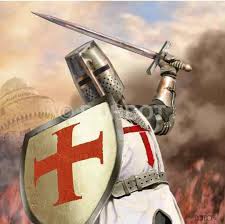
knight in battle
Christendom – the long era of confusion of the Christian cross with the sword – the symbol of coercive state power

When Archbishop Michael Neary said in November 2014 that we are hearing the ‘death rattle’ of Christendom he was clearly not saying that secularism has defeated the church – as the Irish Catholic mistakenly claimed in its headline of November 13.  (‘Church has ‘lost the battle’ with secularism – archbishop’)

The term ‘secularism’ does not appear at all in the Archbishop’s complete homily. A close reading makes it clear that Dr Neary distinguishes between Christendom and Christianity, that he has not given up on the latter, and that he is therefore not at all as pessimistic as the Irish Catholic’s headline could suggest. He has simply recognised that a long era in the history of the church has come to a close.

Dr Neary describes Christendom as a ‘shared set of assumptions about life and its purpose, reflected in use of language, in culture and in the law’.  These shared assumptions were always formed principally by a close relationship between church and state. This relationship created a social envelope in most of Europe from the fourth century onward – an envelope into which most people were born and from which they gained their understanding of the faith.

The Scandals of the Church-State Alliance

This relationship between church and state always severely distorted the church’s message and limited its evangelical impact – giving rise to the very scandals that led to the secularist reaction in the modern era. When the church aligned itself with emperors and kings who had acquired their power by violent competition, its bishops were soon mostly recruited from these very same military-aristocratic elites, and the Gospel message of social humility, peace and welcome for the stranger was necessarily compromised.  The pattern of seeking to ‘convert’ social elites in the expectation that their underclasses would then conform made clergy generally content with mere conformism, not at all the same thing as deep Christian conversion.

The worst scandals of Christendom followed: the persecutions of Jews, ‘witches’, ‘heretics’ and other minorities, the horrific excesses of the Crusades, the churches’ alignment with European global imperialism, and even the corruption of popes and papal courts. From the latter followed the splintering of western Christianity in the 1500s and the inter-Christian religious wars that had alienated so many by the end of the following century. This set the scene for the 18th century reaction historians call the ‘Enlightenment’, the cradle of modern secularism. The ideal of a better world was taken over by democratic political reformers – and this process was consolidated in the later 1700s when Christian hierarchies threw their lot in with the landowning ascendancy from which they themselves had too often been recruited.

The Founding of Maynooth in 1795 – To Preserve an Aristocratic Society

And that was when Ireland’s major seminary, Maynooth, came into being – formed in 1795 by an alliance of landowning aristocrats and Catholic bishops who were equally determined to oppose social and political transformation.  Is it any wonder that modern Catholic social teaching never gripped the imaginations of most Irish secular clergy, and has therefore made so little impact on our political culture? Instead our clergy remained predominantly socially and politically conservative – setting the church up for the secularist reaction of recent decades.

It was the Irish church’s consequent blindness to social elitism and snobbery that led to the worst scandals of the present. In the wake of Irish political independence in the last century the dangers of a close relationship between church and state were illustrated in church-run institutions that cruelly abused the most socially disadvantaged women and children – a scandal still being revealed.

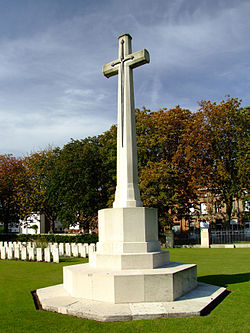
The 'Cross of Sacrifice', Ypres Reservoir Cemetery, 1918. What does the image of the sword on the cross convey to you?
The ‘Cross of Sacrifice’, Ypres Reservoir War Cemetery, 1918.  What does the image of the sword on the face of the cross convey to you?

An Unbalanced Moral Theology

Another effect of Christendom was the unbalancing of Catholic moral theology. Beholden to social elites, clergy too often became blind to the origins of elitism, violence and injustice in the disease of status anxiety (what the Gospel calls ‘worldliness’), and in the sin of covetousness – yearning for what the wealthiest have. Clerical attention became diverted instead into a fixation with the minutiae of people’s sexual lives. This imbalance inevitably distorted the theological understanding of many generations of Catholics.

It is clear from the scriptures that the weight of divine anger falls against injustice and lack of social compassion – the specific faults of social elites – but this emphasis was far too often replaced in Catholic preaching and censure by an obsession with sex. The God whom so many now reject is this same sex-obsessed – and non-existent – God.

Given the distorting straitjacket of Christendom it is truly miraculous that Christianity nevertheless survived – in the lives of saints, in the best theology, in the mystical tradition and in the arts. Nevertheless the long alignment of the church with social elites and the state had done so much damage that an anti-religious secularism was inevitable.

So the death of Christendom is not to be lamented. Instead its benefits should be welcomed and even celebrated – as the necessary precondition for the next phase in the history of Irish Christianity.

The very rapid growth of Catholic Christianity in China – under a regime that regards it with the deepest suspicion and refuses relations with the Holy See – proves that the faith can flourish without the church-state relationship characterised by Christendom.  So did the very rapid growth of the church in the Roman empire before it was legalised by Constantine.  Many Chinese Christian intellectuals also trace the decline of the western church to the church-state relationships of Christendom, and fear the corruptive potential of state patronage in China.  We should pay very close attention to that perception.

The 13th century Franciscan movement was essentially a protest against the corruptions of Christendom, so the reign of the first pope to be called Francis is an ideal moment to begin a new era in Ireland.


Views: 10

The Real Root of Inequality?

Blog_the_abyss_of_inequality

“Rising income inequality troubles Americans,” wrote Shamus Khan in the New York Times (Dec 14, 2013). That’s why the paper commissioned a series on the very same issue, calling it “The Great Divide“. What truly seems to wind up Wall Street is the fear that capitalism and the American Dream may even be facing eventual divorce.

For some a dread prospect looms:  that Karl Marx might have been right in predicting that capitalism leads inevitably to such vast income inequality that middle-class markets for ‘fetishised’ commodities actually dry up.

How Did the USA Become So Unequal

Even as a student in the 1960s I wondered why a society founded on the Enlightenment ideal of social equality had become so vastly unequal in less than two centuries – so this recent American pondering on the same problem was fascinating stuff. So was the prediction of the touring French aristocrat Alexis de Tocqueville, commenting on the same America as early as 1835: “But men will never establish any equality with which they can be contented”. American discontent, he argued, must be never-ending: based as it is upon the desire to ‘get ahead’ it must always be mostly frustrated by the very same desire in others. In the rural backwaters of the ‘old world’ (Europe) De Tocqueville knew of peasants who were far poorer than most Americans ‘yet their countenances are generally placid and their spirits light‘ – simply because, he argued, they didn’t have that particular American discontent.

102626504-income-inequality

Given the Enlightenment origins of the science of Psychology, it is remarkable how little attention has been paid by that discipline to the roots of social inequality. ‘Social Dominance Theory’ claims to explain how and why dominant groups maintain themselves – and there are very persuasive theories also on why individuals tend to join groups to begin with. However, as far as I can see from a month’s scanning of research abstracts, there is as yet no overarching psychological theory of today’s out-of-control social inequality that could withstand historical validation also.This might yet emerge, however, from a more closely focused and long-term study of our human need to secure, maintain and enhance our self-esteem. The ‘Self-Uncertainty’ theory of why we tend to join groups is that the latter reduce our tendency to be uncertain in early life about both ourselves and our world. Successfully serving the interests of a dominant group brings positive feedback and acclaim from its other members – reassurance that we have made the right move, a kind of ‘uncertainty damping’.

Making our group’s worldview our own also tends to lessen our uncertainty about everything else. Today’s economically dominant groups must surely flatter their members to an extent that would beggar Croesus, and convince them that they are ‘righter’ than anyone has ever been.

Uncertainty and Anxiety

In 2004 the philosopher Alain deBotton put a closer focus on a particular variety of human uncertainty – our uncertainty about our own value. Calling this complaint ‘status anxiety’ he argued that it lies at the root of all social snobbery, and even at the root of such modern malaises as depression and addiction. In a supposedly ‘meritocratic’ society those who don’t make it are lacking – by implication – in merit itself – and are therefore denied even the right to value themselves. This makes them far less fortunate than de Tocqueville’s happy peasants, who had no reason to suppose in the 1830s that the aristocrat or bourgeois in the biggest house did not depend primarily – even at table – on the labour of those who lived in the smallest.

The reason this should interest all Christians is that de Botton argues persuasively that what he calls ‘status anxiety’ is what the Gospels call worldliness – the very moral challenge that Jesus himself claimed above all to have bested. “In the world you will have tribulation; but be of good cheer, I have overcome the world.” (John 16:33)

In expounding the divinity of Jesus, how come Christian preaching and theology has placed so little emphasis upon this claim, emphasising instead Jesus’ celibacy as proof of his freedom from sin? Why exactly is it that Yves Congar’s summary still holds valid: “In the Catholic Church it has often seemed that the sin of the flesh was the only sin, and obedience the only virtue?” Why have I (worshipping in Ireland) never yet heard a homilist unpack worldliness as status-seeking – or indict snobbery either – not even in the wake of revelations of devastating abuse of the poorest in Ireland’s Catholic-run 20th century institutions?

burke_cm3

“Which of us is the greatest?” asked even the apostles. The last pope may well have been unshipped by the same fixation among his subordinates. His successor, thankfully, seems to be not only totally free of status anxiety but ready to make it a major target. In Evangelii Gaudium (93) Francis zeroes in on Jesus’ indictment of that complaint: “How can you believe, who receive glory from one another and do not seek the glory that comes from the only God?” (Jn 5:44)

The Universal Journey

This opposition of faith and status-seeking surely needs to be carefully studied by those preparing a ‘New Evangelisation’ now – and seeking a sharper focus on the relevance of Christianity to the problems that secularism hasn’t solved. Such eminent spiritual guides as Richard Rohr OFM have been persuasively arguing for years that all of us need to go on a spiritual journey that has no shortcut – not even through intensive religious instruction – to a mature faith. It is because we are uncertain of our value that even religious professionals can be ambitious for religious acclaim from one another – the origin surely of diseases as various as celebrity evangelism, Vatican careerism, clericalism and what we Irish call ‘lay popery’. To all of this Francis gives the title ‘spiritual worldliness’. It is usually only a deep personal crisis of some kind that can – through heartfelt prayer – shake us free of the delusion that our value depends upon what others think of us – facing us with the stark reality that those others tend to have exactly the same unease.

It was surely the clerical Catholic church’s thirteen-century association at its summit with the ‘movers and shakers’ of the secular world that led to its current crisis of credibility – its eye-shutting at status seeking and its sex-fixated moral theology. The threat of ‘aggressive secularism’ will never be faced down by mere intellectual rivalry with it. We all need to become aware of our tendency to contribute to inequality by engaging in any kind of grim competition – and to establish by our own ‘self-dying’ that the roots of modern inequality lie in a problem targeted squarely in the Gospel.

So the Franciscan revolution in Rome is potentially far more than a change of style. It is visibly a return to the most important moral critique of the Christian tradition – the assault on self-promotion. The greatest game afoot now is surely to beat anti-religious secularism, joyfully, to the only solution to the global problem of unsustainable inequality – a deeper, thoroughly actuated, spiritual wisdom.

(16/08/2014)


Views: 6

Honour and Shame – and Ireland’s ‘Culture War’

“Galway historian finds 800 babies in septic tank grave”, reported the Boston Globe in early June, 2014. As it happened I was in Boston when this story broke, and was soon reading of the necessary corrections by the historian concerned, Catherine Corless.

Yes, close to 800 babies had died in a Tuam mother-and-baby home between 1925 and 1961, but only some remains had been observed by two boys as long ago as 1975, in an area that had once enclosed a sewage tank. The precise location of the rest of those remains is today unknown. Before we can assess as Catholics the full import of these events we must wait for the report of an Irish state-sponsored investigation of this and other similar establishments in the same era.

‘Culture War’?

The phrase ‘culture war’ originated in the United States – to describe especially the battle over the legalisation of abortion and the promotion of gay legal rights. Socially conservative Christians determined to exert pressure on the state to apply its coercive power against the principle of ‘choice’ in these areas are deeply embattled against those who believe the state should have no such role.

In Ireland over recent years an analogous ‘culture war’ has developed – focused especially on the responsibility of the Catholic Church for Ireland’s 20th century miseries. In Ireland too there are ongoing political battles over abortion and gay rights, and inevitably Catholicism is often scapegoated for all that was unjust in the recent past – as a means of undermining any residual hold it might have upon the present and future.

Resentful of this trend, and deeply hurt by over two decades of church scandals, some Irish Catholics are now inclined to hit back with equal vigour. ‘Blood libel’ is one Catholic commentator’s characterisation of the worst of the ‘Tuam Babies’ stories.

However, there is a real danger of a loss of balance here, and of a failure to recognise the genuine shortcomings of Catholic culture and practice in Ireland in the last century. This can very easily lead to a failure to recognise similar shortcomings in the present.

Why did Irish Catholic clergy collaborate in shaming women?

Why in particular was there no effective opposition by Catholic clergy in the last century to the social shaming of pregnant and unmarried women? Clergy then were far from slow in naming a wide range of moral defects, especially those in any way concerning the 6th commandment – so why the failure to indict a clear breach of the Great Commandment – ‘Thou shalt Love’ – in the treatment of those seen as failing in that area of sexuality? Why was the compassion so often shown by God in the Bible for the shamed woman not exemplified, vociferously and generally, by our clergy?

In the stories of Hagar the slave girl, of Susanna and the Elders, of the Samaritan woman at the Well and of the woman rescued by Jesus in the Temple, the inalienable dignity of the less fortunate woman is affirmed – so why was this never a major theme of Catholic evangelisation in Ireland? Why instead was there complete Catholic toleration, if not positive encouragement, of the shaming and scapegoating of unfortunate women?

And why was the generic evil of all shaming and shunning, so clearly identified in the Gospels, never strongly targeted in Irish Catholic clerical moralism? Why was it never noticed that the passion of Jesus is centrally about such shaming, expulsion and marginalisation – that the mocking of Jesus with a crown of thorns, and with crucifixion itself, is a divine exposure of the self-righteousness and lack of compassion, and deep injustice, that is present in all such practices?

Snobbery never a sin?

Recently in the Derry Journal Bishop Donal McKeown identified ‘greed and snobbery’ as the two human qualities he least admires. It was above all Irish middle-class Catholic snobbery – a ‘looking down’ on others – that lay at the root of the ostracisation of the unmarried and pregnant female. It is almost certainly today a continuing factor in the problem of abortion also – so why is snobbery never (in my long experience at least) a target of the homily?

The answer must surely lie in the clerical church’s too long alignment with social elites, in a deficient theological preparation for Catholic ministry, and in the male monopoly of the pulpit.

There is a treasure to be regained by recovering a theological understanding of the dimension that runs between social honour and social shame, so well revealed in the whole of scripture, and especially in the New Testament. It was especially the contemporary brokers of honour and shame in Jesus’ time – the Herods and the Caesars – who were to be exposed and overthrown by the wisdom and humility of Jesus, as promised in Mary’s prophesy, the Magnificat. By implication, all social presumption in the whole of human history is indicted and destined for overthrow.

Centuries of clerical alignment with social elites

The fault underlying all Catholic shaming of the unfortunate surely began with the church’s association with social elites, sealed in the fourth century by the conversion of the Roman emperor Constantine. Only slowly, as Catholicism loses all privilege, are we separating ourselves from that mindset. We should surely now see the ongoing revelation of the shortcomings of so much of the Catholic culture of the recent past not as cause for resentment or animosity towards those who revel in it, but as an opportunity to identify the generic problem of social elitism, and to separate ourselves totally from it.

The worst mistake would be to focus solely on the injustices of the anti-Catholic campaign that is indeed being waged. There are indeed new brokers of honour and shame in 21st century Ireland, many clamouring unjustly on this medium, the Internet. There is indeed a tendency now among some to scapegoat Catholic clergy and religious for all that was wrong with Ireland in the last century and even this one. However, to fail to recognise the benefits of the loss of social power and prestige that has overtaken the church in this transition would be another disastrous Catholic ‘own goal’.

Social disempowerment was the role deliberately chosen by the church’s founder.  The church in Ireland will only begin to recover when it realises that disempowerment is a necessary condition of Christian wisdom. We will not be seeing the world as God sees it unless we can see it through the eyes of those today who still suffer social exclusion and marginalisation (for example, asylum seekers). That should be our primary learning from this most recent event, not the need for a new offensive in the culture wars.

Good riddance to Christendom

The recovery of Christianity in the West generally cannot begin until we fully absorb the lessons in humility that all scandals provide. What’s ongoing in Ireland is also ongoing throughout the West – the necessary demise of Christendom – that attitude of arrogant power that is the fount of all Christian scandal. Loss of all social power and vanity is the very necessary prelude to the recovery of what is truly greatest in our Christian tradition.

Views: 11